


 04 Sep 2026
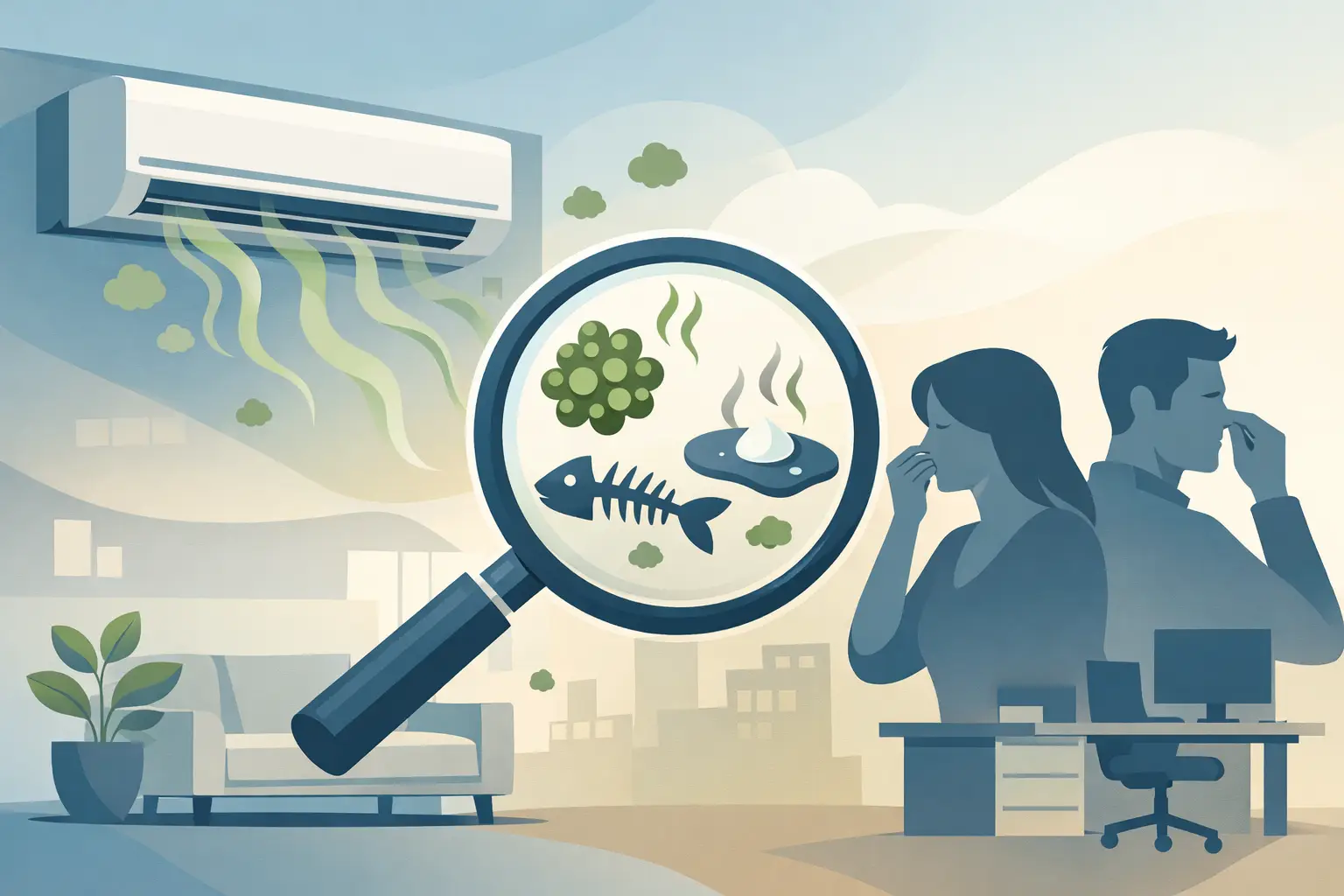
When cool air starts carrying a sour, musty, burning, or sewage-like smell through your home or building, it is more than a comfort issue. Understanding what causes AC odors can help you respond before a minor maintenance need becomes water damage, reduced indoor air quality, equipment failure, or an unexpected shutdown.
Some odors are temporary and harmless. Others point to conditions that should be inspected promptly, particularly in New Jersey’s humid summer weather, when condensation and heavy AC use can expose problems quickly. The smell itself provides useful clues, but it should not replace a professional diagnosis.
What Causes AC Odors?
An air conditioner does not create odors on its own. It moves air across components, through ducts, and into occupied spaces. When moisture, dust, microbial growth, overheated electrical parts, pests, plumbing gases, or chemical leaks are present, the system can distribute those odors throughout the property.
The source may be inside the indoor air handler, in the ductwork, at the condensate drain, or somewhere nearby that the system is pulling air from. In commercial spaces, the issue can also involve rooftop equipment, large return-air pathways, shared mechanical rooms, or drainage systems.
The timing matters. A smell that appears only when the system first starts may have a different cause than one that becomes stronger after it has run for 20 minutes. Likewise, an odor confined to one room may point to a local drain, duct, or return-air issue rather than the central AC unit.
Musty or Mildewy Odors
A musty smell is one of the most common air conditioning complaints. Usually, it means moisture is lingering where it should not. Mold and mildew can grow on the evaporator coil, in the drain pan, inside a clogged condensate line, or in damp duct insulation.
Your evaporator coil removes humidity from the air as it cools. That moisture should drain away through a condensate line. If the drain is blocked by algae, dirt, or buildup, water may back up into the pan or air handler. The result can be a stale, damp odor that becomes noticeable whenever the blower runs.
A dirty air filter can contribute to the problem because restricted airflow allows more dust and moisture to collect around the coil. Replacing the filter may help, but it will not solve a blocked drain or contaminated coil. If the odor persists, the system needs an inspection and cleaning that addresses the actual source.
Dirty Sock Smell
Homeowners sometimes describe a sharp, sweaty-gym-sock smell when cooling begins. This is often called dirty sock syndrome. It typically occurs when bacteria and organic material build up on a damp evaporator coil.
The odor may be stronger during mild weather, when the equipment cycles on and off more often and the coil does not fully dry. Coil cleaning can often correct the issue. Depending on the system, a technician may also recommend improving drainage, addressing airflow restrictions, or applying an appropriate coil treatment.
Rotten Egg or Sewage Odors
A rotten egg, sewer, or sulfur-like smell requires attention. In some homes, a dry plumbing trap near an air handler can allow sewer gases to enter a utility area and get pulled into the return air. A cracked drainpipe, failed vent, or nearby plumbing issue can create a similar problem.
Do not assume every rotten egg odor is an HVAC issue. Natural gas is odorized to smell like sulfur or rotten eggs so leaks can be detected. If you suspect a gas leak, leave the building, avoid switches and open flames, and contact the gas utility or emergency services from a safe location. Do not operate the AC system until the situation has been cleared.
For a sewage-like odor without a gas-leak concern, an HVAC technician can help determine whether return-air leaks, condensate drainage, or nearby plumbing conditions are allowing odors into the system.
Burning, Electrical, or Smoky Smells
A brief dusty-burning odor during the first heating cycle of the season can be normal as settled dust burns off. During air conditioning operation, however, a persistent burning smell is not something to ignore.
Electrical odors may come from an overheating blower motor, failing capacitor, loose connection, damaged wiring, or a circuit-board issue. A rubbery or hot-plastic smell can indicate stressed electrical insulation or a component operating at unsafe temperatures. Turn the system off and arrange service rather than continuing to run it.
A smoky smell is more urgent. Shut off the equipment at the thermostat if it is safe to do so and contact a qualified HVAC professional. For visible smoke, sparks, or fire, leave the property and call 911.
Chemical, Sweet, or Solvent-Like Smells
A chemical odor near an AC system can have several causes. Cleaning products, paint, stored solvents, or vehicle fumes may be entering through return-air leaks or outdoor-air intake areas. This is especially relevant in garages, mechanical rooms, warehouses, and commercial facilities where chemicals are stored or used.
Some people describe refrigerant leaks as sweet, ether-like, or chemical. Odor alone cannot confirm a refrigerant problem, but it deserves prompt attention if it appears with weak cooling, hissing sounds, ice on the refrigerant line or indoor coil, or unusually long run times. Refrigerant should only be handled by a certified technician. Adding refrigerant without finding and repairing a leak is not a lasting solution.
Vinegar, Sour, or Urine-Like Odors
A sour or vinegar-like smell often points back to microbial growth in the drain line, drain pan, or evaporator coil. It can also result from standing water in a neglected condensate pump.
A urine-like odor may indicate pest activity near the air handler, in a crawl space, or inside ductwork. Rodents and other pests can leave nesting materials, droppings, or carcasses in areas connected to the air stream. In those cases, cleaning the HVAC equipment is only part of the repair. The entry point and affected materials also need to be addressed.
Why AC Odors Can Get Worse Over Time
Ignoring odors can allow the underlying issue to grow. A partially clogged drain line can become a full blockage, leading to water overflow, ceiling damage, or a safety switch that shuts down the system. Coil buildup can reduce airflow and efficiency, making the equipment work harder while delivering less comfort.
For property managers, odor complaints also affect tenant satisfaction and can signal a larger maintenance concern. One unit with a persistent musty smell may be isolated, but multiple complaints can indicate shared ductwork issues, moisture intrusion, oversized equipment that short-cycles, or a building ventilation imbalance.
Older homes and commercial buildings deserve particular care because duct leakage and aging insulation can pull air from attics, basements, wall cavities, garages, and mechanical spaces. The AC may be working mechanically while still circulating unpleasant or unhealthy air from outside the conditioned area.
What You Can Check Before Scheduling Service
Start with the simple, safe checks. Replace a visibly dirty filter with the correct size and type. Look around the indoor unit for standing water, a full drain pan, or signs of a condensate leak. Check whether the odor is strongest at one vent, throughout the building, or near the equipment itself.
You can also note when the odor occurs: only at startup, only during cooling, after rain, or continuously. These details help a technician diagnose the problem efficiently.
Avoid spraying fragrances into return vents or pouring harsh chemicals into the system. Air fresheners can mask the warning sign without fixing it, and some cleaners can damage components or create fumes. Do not open electrical panels or attempt refrigerant repairs yourself.
When to Call an HVAC Professional
Schedule service quickly for recurring musty odors, water around the air handler, chemical smells, weak cooling, frozen lines, or any smell that affects occupants’ comfort. Shut the system down and call for help immediately if you notice burning, smoke, electrical odors, or a suspected gas leak.
A proper service visit should look beyond the air filter. The technician may inspect the coil, blower, condensate pan and drain, ductwork, insulation, electrical connections, refrigerant performance, and return-air pathways. The right repair depends on the source, not just the smell.
For homes and businesses across New Jersey, Tamco Air can identify the cause, explain the repair in clear terms, and help restore clean, reliable cooling. A clean-smelling AC is not a luxury – it is a practical sign that your system is draining, filtering, and moving air the way it should.