31 Oct 2026

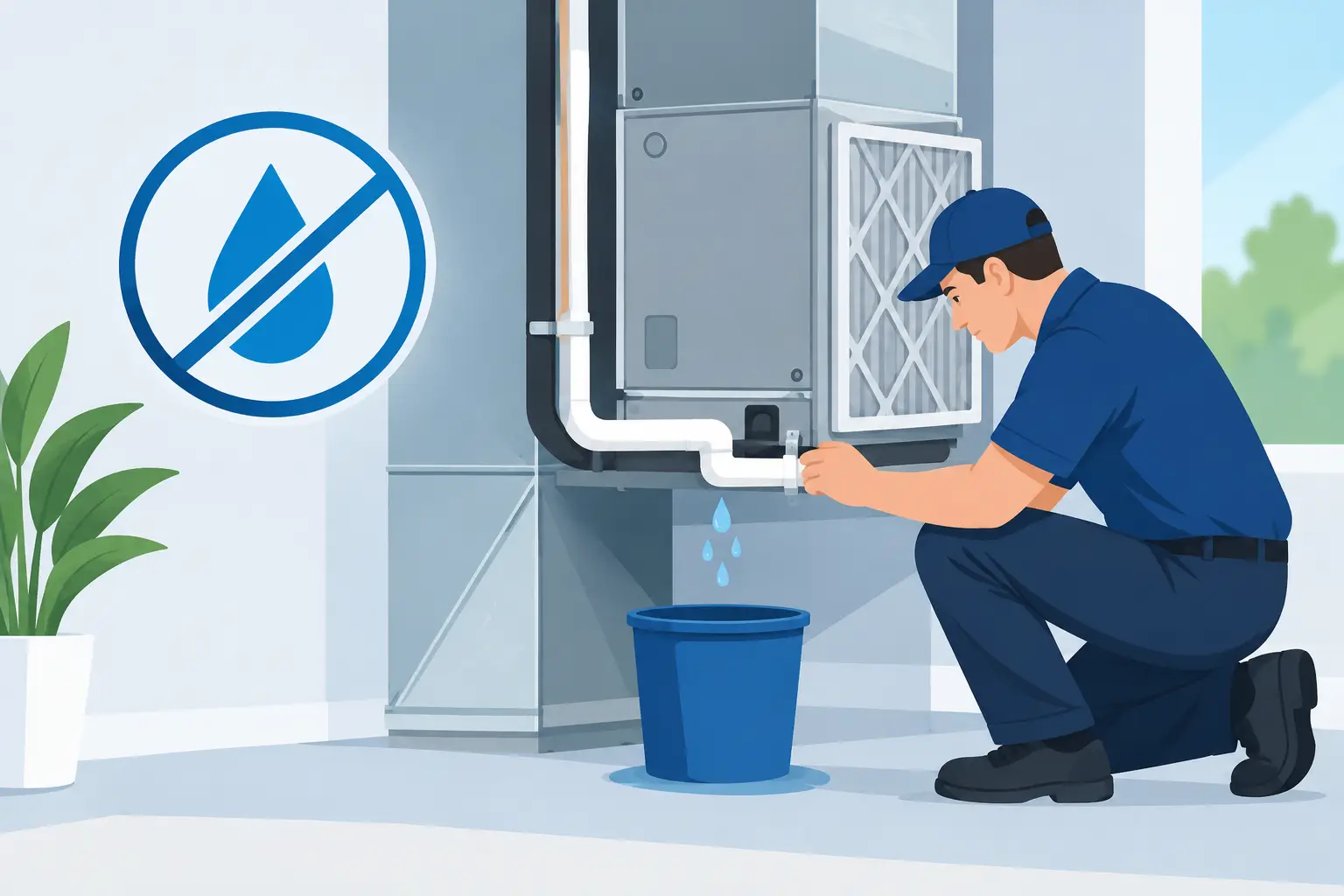
A puddle beneath an indoor AC unit, water staining a ceiling, or a musty smell near a mechanical closet is more than an inconvenience. To stop HVAC water leaks before they damage drywall, flooring, insulation, or equipment, the source needs to be identified quickly. In many cases, the problem is a blocked drain or neglected maintenance item. In others, it points to an installation, airflow, or refrigerant issue that requires a qualified technician.
For New Jersey homeowners and property managers, timing matters. Summer humidity can make condensate problems show up fast, while an overlooked leak in a commercial space can disrupt tenants, inventory, and daily operations. Here is how to respond safely and what usually causes the water in the first place.
Why an HVAC System Produces Water
Your air conditioner removes heat and humidity from indoor air. As humid air passes over the cold evaporator coil, moisture condenses on the coil and drips into a drain pan. From there, it should travel through a condensate drain line to a safe discharge point.
That process is normal. Water around the system is not. When the drain path is blocked, the pan is damaged, the unit is freezing, or the condensate pump fails, that water can overflow where it should not. High-efficiency furnaces can also create condensate, so a heating system leak should never be dismissed just because the AC is off.
What to Do When You Find an HVAC Leak
Start by protecting the area. Turn the thermostat from cooling to off if water is actively dripping from the indoor unit, ceiling, or return vent. Do not keep running an air conditioner that is overflowing. Continued operation can spread the damage and may affect electrical components.
Move rugs, furniture, storage boxes, and electronics away from the water. If the leak is near a breaker panel, electrical outlet, or exposed wiring, avoid the area and call for professional help immediately. For a ceiling leak, place a container beneath the drip but do not puncture the ceiling unless you understand the risks of falling wet drywall and nearby wiring.
Next, look for the basic clues: Is the filter heavily clogged? Is there ice on the refrigerant line or indoor coil cabinet? Is the drain pan full? Is a condensate pump alarm sounding? These observations help narrow down the cause, but they do not always provide a safe DIY repair.
The Most Common Causes of HVAC Water Leaks
A clogged condensate drain line
This is one of the most frequent causes of AC water leaks. Algae, dirt, dust, and biological growth can build up inside the line over time. Once the line slows or plugs completely, water backs up into the drain pan and eventually overflows.
Some homeowners can clear a simple exterior drain outlet with a wet/dry vacuum. However, forcing debris farther into the line or using harsh chemicals can create a bigger problem. A technician can clear the line properly, inspect the trap and vent, and confirm the drain has the correct slope.
A dirty air filter or restricted airflow
A clogged filter can restrict airflow across the evaporator coil. When the coil gets too cold, it may freeze. After the system shuts off or the ice begins to melt, the drain pan can receive more water than it can handle. You may notice weak airflow, ice on the copper refrigerant line, or a system that runs but does not cool well.
Replace a disposable filter with the correct size and rating if it is visibly dirty. Then leave the cooling system off long enough for any ice to thaw. If freezing returns after the filter change, the system needs service. The cause may be low refrigerant, a blower issue, dirty coils, or improperly sized ductwork.
A damaged or rusted drain pan
Older systems may have a corroded primary drain pan beneath the coil. Many installations also include a secondary pan under the air handler, especially when equipment is located in an attic or above finished space. Cracks, rust holes, and poor pan positioning can allow water to escape before it reaches the drain.
A pan issue is not always visible without opening equipment panels. This is a good example of why a recurring stain on the ceiling or wall should be investigated rather than covered with paint.
A failed condensate pump
Basements, utility rooms, and commercial mechanical spaces do not always have a floor drain nearby. In these situations, a condensate pump moves water from the unit to a drain or exterior discharge location. If the pump loses power, its float switch sticks, its reservoir becomes dirty, or its discharge tubing clogs, water can spill from the pump or back up into the HVAC unit.
A working pump should activate when the reservoir fills. If it is silent despite standing water, or if it runs continuously without moving water, schedule a repair. Replacing a failing pump before it overflows is far less expensive than repairing finished walls or ceilings.
Frozen coils or refrigerant problems
Ice on an indoor coil is not simply a drainage problem. It can result from restricted airflow, but it can also indicate low refrigerant from a leak. Refrigerant should not be routinely “topped off.” If the charge is low, a professional should locate the leak, repair it when practical, and verify system performance.
This is especially important for aging equipment. A repair may be the right choice, but repeated refrigerant issues can change the replacement conversation. The best option depends on the equipment’s age, condition, repair history, efficiency, and the cost of correcting the underlying problem.
A disconnected or poorly installed drain line
Drain lines can shift, crack, separate at fittings, or drain improperly after renovation work, settling, or equipment replacement. Poor slope, an incorrect trap, or an unprotected outdoor termination can all interfere with drainage. On commercial rooftop units, blocked drains and improper pitch can create roof-level water problems that are easy to miss until damage appears below.
How to Stop HVAC Water Leaks With Preventive Maintenance
The most reliable way to stop HVAC water leaks is to treat condensate drainage as a routine maintenance item, not an emergency repair. Change filters on schedule based on the filter type, household conditions, pets, occupancy, and system use. A one-inch filter often needs more frequent attention than a deeper media filter.
During seasonal service, have the condensate line flushed, the drain pan inspected, the evaporator coil checked, and the condensate pump tested where applicable. A technician should also check refrigerant performance, blower operation, electrical connections, and safety switches. These items work together. A clear drain line alone will not solve a system that is freezing because airflow is poor.
Property managers should include drain checks in their preventive maintenance plan before the cooling season. In apartment buildings, offices, and retail spaces, a small condensate issue can affect multiple suites if equipment is installed above occupied areas. Maintenance records also make it easier to identify repeat failures and decide when repair is no longer the most cost-effective path.
When to Call for HVAC Repair Right Away
Call for service promptly when water is entering a ceiling, wall, electrical area, or finished space. You should also schedule an inspection if you see recurring puddles, ice on refrigerant lines, mold-like odors, weak cooling, a full auxiliary pan, or a condensate pump that will not operate.
Do not rely on shutting off the system and hoping the problem disappears. The water may stop temporarily while the unit is off, but the cause remains. A proper diagnostic visit should identify whether the issue is drainage, airflow, refrigerant, equipment condition, or installation quality.
Tamco Air helps homeowners and commercial customers across New Jersey diagnose HVAC leaks, restore safe drainage, and address the system conditions that caused the overflow. Fast attention can often keep a minor drain issue from becoming a drywall, mold, or equipment replacement project.
A dry mechanical area is a sign that the system is doing its job quietly. If you see water where it does not belong, turn the unit off when safe, protect the space, and arrange service before the next cooling cycle sends more water through the problem.