


 21 Jul 2026
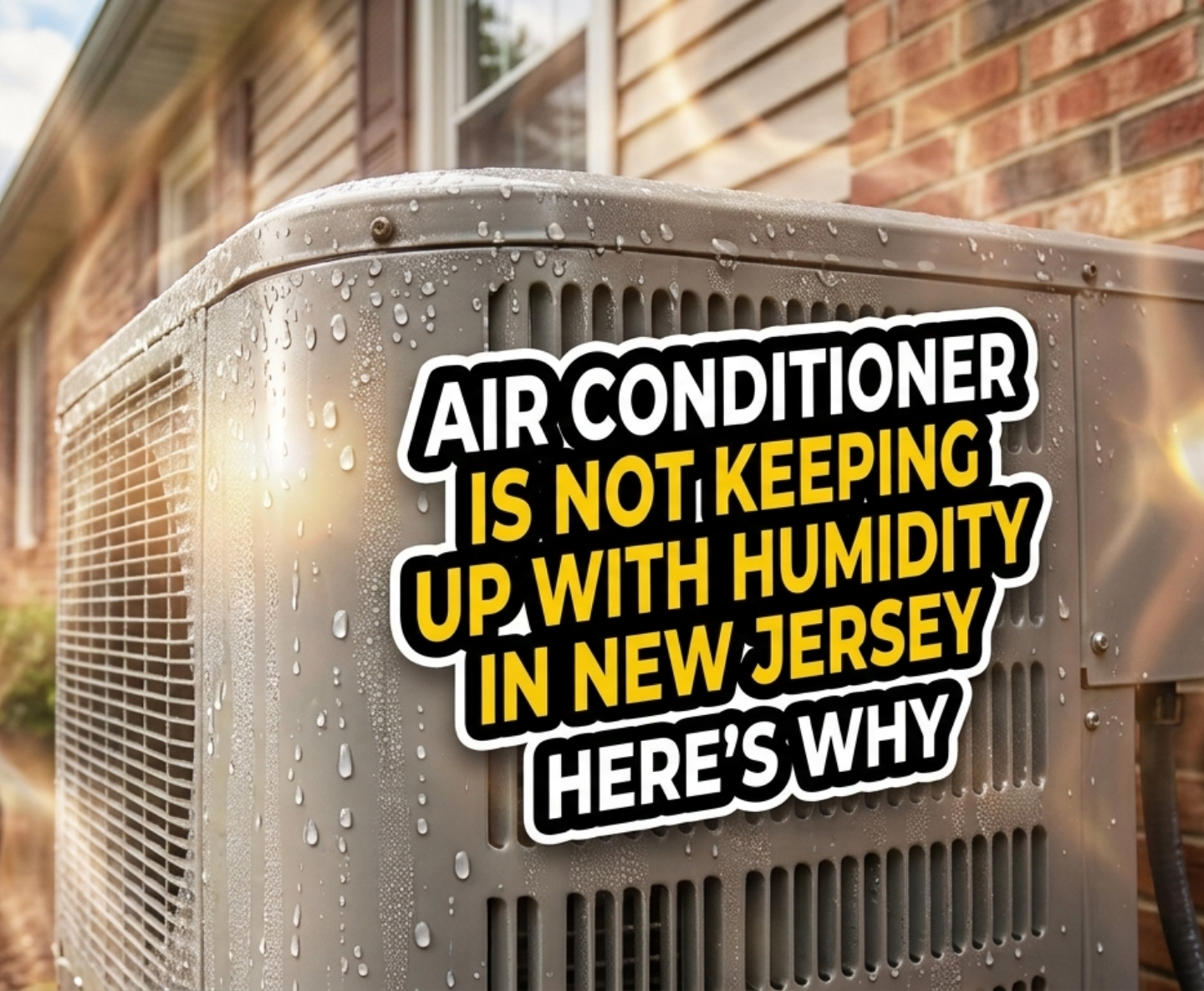
If your AC can lower the temperature but your home still feels sticky, heavy, or uncomfortable, the problem may not be temperature alone. In New Jersey, summer humidity can make an air-conditioned home feel warmer than the thermostat shows. Your system may be cooling, but not removing enough moisture from the air.
This is a common issue in NJ homes because summer weather often brings both heat and high humidity. When the air is humid, your AC has to do two jobs at once: remove heat and pull moisture out of the indoor air. If airflow, coil condition, system sizing, or runtime is not right, humidity control suffers quickly.
A home can be set to 72°F and still feel uncomfortable if indoor humidity is too high. That is why an AC that “can’t keep up” may actually be struggling with moisture, not just cooling capacity.
Why New Jersey Humidity Makes Cooling Harder
New Jersey summers often feel heavier because warm air holds more moisture. When humidity is high, sweat evaporates more slowly from the skin, so the body feels hotter even when the air temperature is not extreme.
Your AC helps by cooling the air and removing moisture as warm indoor air passes over the cold evaporator coil. Moisture condenses on the coil, drains into the condensate pan, and exits through the drain line.
For this process to work well, the system needs:
- Proper airflow
- A clean evaporator coil
- Long enough cooling cycles
- Correct refrigerant charge
- A clear condensate drain
- Proper system sizing
- Good duct design
If one of these is off, the AC may cool the air but fail to remove enough humidity.
1. Your AC Is Short Cycling
Short cycling means the AC turns on and off too quickly. This is one of the biggest reasons a home stays humid. The system may cool the air fast enough to satisfy the thermostat, but it does not run long enough to remove moisture properly.
Common causes of short cycling include:
- Oversized AC system
- Dirty air filter
- Thermostat problems
- Low refrigerant
- Dirty coils
- Electrical issues
- Poor airflow
In humid NJ weather, short cycling can make the home feel clammy. The thermostat may say the temperature is fine, but the air still feels damp because dehumidification needs longer runtime.
2. The Evaporator Coil Is Dirty
A dirty evaporator coil reduces both cooling and moisture removal. Since humidity condenses on the coil, buildup on the coil surface can interfere with heat transfer and drainage.
When the coil is dirty, the system may:
- Run longer but cool less effectively
- Remove less humidity
- Produce musty odors
- Develop ice on the coil
- Increase energy use
- Put more strain on the compressor
This problem is especially noticeable during humid New Jersey summers because the coil is handling more moisture. Professional coil cleaning for peak performance can help restore proper heat transfer, improve moisture removal, and support better cooling efficiency.
3. The AC Is Too Large for the Home
An oversized AC may sound like an advantage, but it often creates humidity problems. A large system can cool the air quickly, then shut off before enough moisture has been removed.
This is why some homes feel cold but damp. The temperature drops, but the humidity stays high.
Signs your AC may be oversized include:
- Frequent on-and-off cycling
- Cool but clammy indoor air
- Uneven room temperatures
- Poor humidity control
- High energy bills
- Short cooling cycles
For NJ homes, correct AC sizing matters because humidity control is part of comfort. A properly sized system should run long enough to cool and dehumidify at the same time.
4. Airflow Is Restricted
Your AC needs steady airflow across the evaporator coil. If airflow is restricted, the system cannot remove heat or moisture efficiently.
Common airflow problems include:
- Dirty air filter
- Blocked return grille
- Closed supply vents
- Dirty blower wheel
- Leaky ductwork
- Crushed ducts
- Weak blower motor
- Dirty evaporator coil
Restricted airflow can also cause the evaporator coil to get too cold and freeze. Once ice forms, cooling and humidity removal drop even more.
Start with the air filter. If it is dirty, replace it. Then check that vents and returns are open and not blocked by furniture, curtains, or rugs.
5. The Condensate Drain Is Clogged
Humidity removed from the air has to drain out of the system. If the condensate drain line is clogged, water may back up into the drain pan, trigger a safety switch, or create musty odors.
A clogged drain can cause:
- Water near the indoor unit
- AC shutting off
- Musty smell from vents
- Higher indoor humidity
- Drain pan overflow
- Ceiling or wall damage
In humid weather, your AC produces more condensate. That makes drain problems more likely during New Jersey summer conditions. If the system shuts off unexpectedly or smells musty, the drain line should be inspected.
6. Duct Leaks Are Pulling in Humid Air
Leaky ductwork can make humidity problems worse. If return ducts pull air from an attic, crawl space, basement, or garage, the system may bring humid air into the HVAC system and distribute it through the home.
Duct leaks can also waste cooled air before it reaches the rooms.
Signs of duct problems include:
- Some rooms feel more humid than others
- Weak airflow
- High energy bills
- Dusty indoor air
- Uneven cooling
- Long AC runtimes
- Hot or humid air near returns
In NJ homes with ducts running through attics or older utility spaces, duct leakage can be a major reason the AC cannot keep up with humidity.
7. The System Is Not Maintained Before Summer
Humidity problems often become worse when seasonal maintenance is skipped. A system may still turn on and cool, but dirty coils, clogged filters, weak airflow, low refrigerant, or drain issues can reduce performance.
Before peak summer humidity, HVAC maintenance should include:
- Air filter check
- Coil inspection
- Condensate drain inspection
- Refrigerant check
- Blower inspection
- Thermostat testing
- Outdoor unit cleaning
- Airflow evaluation
This is especially important in New Jersey because the AC has to manage both heat and moisture for much of the summer.
How to Tell If the Problem Is Humidity, Not Temperature
If your home feels uncomfortable even when the thermostat looks normal, humidity may be the issue.
Common signs include:
- Air feels sticky or heavy
- Rooms feel cool but damp
- Musty odors appear
- Windows show condensation
- Bedding or furniture feels slightly damp
- AC runs but comfort does not improve
- You keep lowering the thermostat to feel comfortable
Lowering the thermostat may make the house colder, but it does not always solve humidity. In fact, it may increase energy use without fixing the real problem.
What Helps Your AC Handle NJ Humidity Better
Improving humidity control usually starts with airflow, coil condition, drainage, and system runtime. In some homes, equipment sizing or ductwork also needs attention.
Helpful solutions include:
- Replace dirty air filters regularly
- Clean evaporator and condenser coils
- Keep supply and return vents open
- Inspect the condensate drain line
- Seal duct leaks
- Check refrigerant charge
- Use a properly sized AC system
- Consider a whole-home dehumidifier if needed
- Schedule HVAC maintenance before summer
A whole-home dehumidifier may be useful in homes where humidity remains high even when the AC is working correctly. This is especially helpful for basements, older homes, and tightly sealed homes with limited ventilation.
Final Thoughts
If your AC cannot keep up with New Jersey humidity, the issue may not be cooling alone. High humidity makes the home feel warmer, heavier, and less comfortable, even when the thermostat shows a normal temperature.
The most common causes are short cycling, dirty coils, oversized equipment, restricted airflow, clogged condensate drains, duct leaks, and lack of maintenance. These problems reduce the system’s ability to remove moisture from indoor air.
For NJ homeowners, good cooling means more than cold air. It means proper humidity control, clean coils, steady airflow, clear drainage, and correctly sized equipment. If the home feels cool but still sticky, the AC system should be inspected before the problem leads to higher energy bills or equipment strain.