


 23 Sep 2026
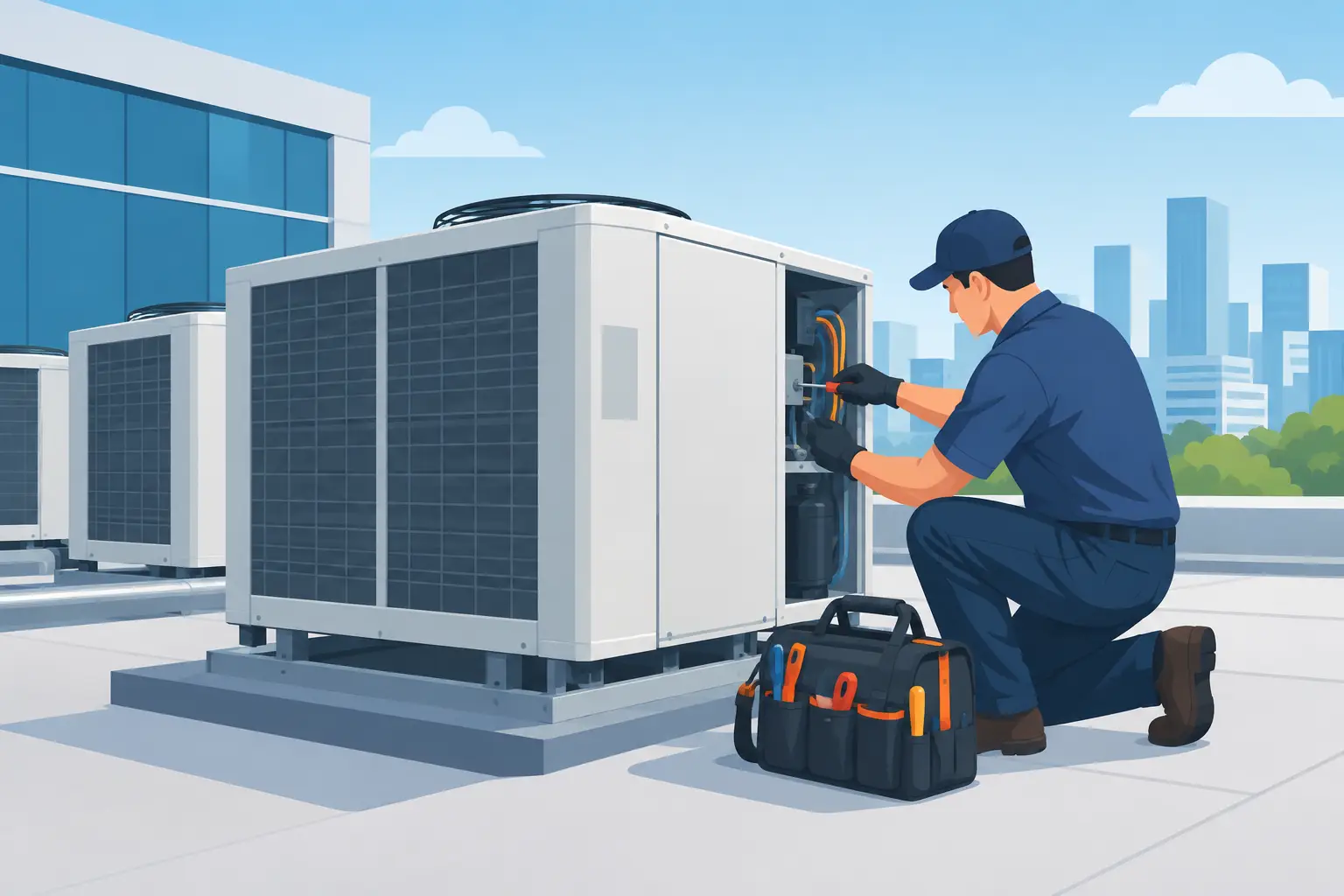
A rooftop unit that fails at 2 p.m. in July can quickly turn into more than a repair call. Tenants get uncomfortable, staff lose productivity, equipment rooms overheat, and a property manager is left answering questions. The best commercial HVAC maintenance practices are designed to prevent that chain reaction. They keep heating and cooling equipment dependable, make energy use more predictable, and give facility teams time to plan repairs instead of reacting to emergencies.
For New Jersey commercial properties, maintenance must account for humid summers, cold winters, shoulder-season temperature swings, and the realities of occupied buildings. An office suite, apartment building, retail space, restaurant, and warehouse do not have the same operating demands. The right plan starts with how the building is actually used.
Start With a Building-Specific Maintenance Plan
A generic checklist has value, but it should not be the entire strategy. Your maintenance provider should begin with an equipment inventory: rooftop units, split systems, boilers, furnaces, make-up air units, exhaust fans, thermostats, controls, ductless systems, and indoor air quality equipment. Record model numbers, ages, capacities, locations, warranty information, and any recurring service history.
From there, set service intervals based on use. A lightly occupied professional office may need a different schedule than a mixed-use building with restaurants on the first floor or an apartment property with common-area equipment running daily. Systems serving critical areas – server rooms, medical offices, kitchens, or high-occupancy spaces – deserve closer attention and, in many cases, backup planning.
A written plan also makes budgeting easier. When a technician identifies a worn blower motor, failing compressor contactor, deteriorating belt, or aging rooftop unit, you can prioritize the work before it becomes an after-hours failure. Maintenance is not about replacing every part early. It is about using inspection results to make sensible decisions at the right time.
Keep Airflow Clean and Consistent
Restricted airflow is one of the most common and avoidable causes of HVAC strain. Dirty filters, blocked return grilles, clogged coils, damaged ductwork, and failing belts can force equipment to run longer while delivering less comfort. That raises utility costs and can shorten the life of expensive components.
Filter changes should follow actual conditions, not just a date on the calendar. A building near construction, a busy retail location, or a property with high tenant turnover may load filters faster than a low-traffic office. During each visit, technicians should inspect filters, clean accessible coils, check drain pans and condensate lines, and look for signs of airflow imbalance.
Do not overlook outdoor equipment. Leaves, cottonwood, trash, and landscaping growth can block condenser coils and reduce heat transfer. Keeping the area around a rooftop unit or condensing unit clear gives technicians safe access and helps the system reject heat properly during peak cooling weather.
Watch for Comfort Complaints by Zone
One hot office or a chronically cold apartment is often a clue, not an isolated inconvenience. It may point to a stuck damper, thermostat issue, duct leakage, blocked diffuser, control problem, or equipment that is no longer properly sized for the space.
Track recurring complaints by location and time of day. This gives your HVAC contractor useful information before arriving on site and helps distinguish a one-time tenant preference from a real mechanical issue. In multi-zone buildings, balancing and control adjustments can sometimes solve comfort problems without replacing major equipment.
Schedule Service Before Peak Seasons
Spring cooling maintenance and fall heating maintenance remain the backbone of a dependable commercial service plan. The goal is simple: find problems when scheduling is flexible and before equipment is working at full capacity.
A practical annual cadence includes:
- Spring inspections for cooling operation, refrigerant performance, electrical components, coils, drains, and controls.
- Summer checkups for high-runtime equipment and any areas with persistent temperature complaints.
- Fall inspections for heating operation, combustion safety where applicable, heat exchangers, ignition components, and ventilation.
- Winter follow-up for equipment exposed to severe weather, snow, ice, or unusual operating conditions.
The exact timing depends on the system and building schedule. For example, a restaurant may require more frequent attention to make-up air and exhaust equipment, while a school or office building may benefit from scheduling major work during lower-occupancy periods. The key is to avoid waiting for the first heat wave or cold snap to test whether the system is ready.
Inspect Electrical, Mechanical, and Safety Components
Commercial HVAC systems contain many small parts that can create big disruptions. Loose electrical connections, worn capacitors, deteriorated contactors, weak motors, cracked belts, and out-of-range controls can all lead to poor performance or sudden shutdowns.
During preventive maintenance, technicians should verify voltage and amperage readings, inspect wiring and disconnects, test safety controls, lubricate components when required, and check belts, pulleys, bearings, and blower assemblies. For heating equipment, combustion testing and inspection of venting and heat exchangers are especially important. These checks protect occupants as well as equipment.
Property managers should also ask for clear service documentation. A useful report explains what was inspected, what was corrected, what should be monitored, and which repairs should be planned. A report full of technical terms without a recommendation does not help a building owner make a decision.
Use Controls to Reduce Waste, Not Comfort
Programmable thermostats, building controls, occupancy scheduling, and smart sensors can reduce unnecessary runtime. But controls only work well when they are correctly installed, commissioned, and reviewed as building operations change.
A common mistake is setting aggressive setbacks that save energy on paper but force equipment to work excessively hard to recover before occupants arrive. Another is giving multiple people authority to change setpoints, creating conflicting schedules and constant overrides. Establish reasonable temperature ranges, assign responsibility for adjustments, and review schedules after tenant changes or renovations.
For larger facilities, trend data can reveal issues that are difficult to spot during a single visit. Repeated short cycling, unusual runtime, rising supply-air temperatures, or a steady increase in energy use may signal a developing problem. Not every property needs a complex building automation system. The right level of controls depends on the size of the building, the number of zones, and the cost of downtime.
Plan Repairs and Replacements With Total Cost in Mind
Preventive maintenance does not mean an older system will last forever. At some point, repeated repairs, declining efficiency, limited parts availability, and tenant complaints may make replacement the better business decision.
Look beyond the price of the immediate repair. Consider the unit’s age, repair history, efficiency, expected remaining life, warranty status, and the operational impact of a failure. A repair may be the right choice for equipment with years of useful service left. For an aging unit that has become unreliable, planning a replacement during mild weather can be less disruptive and more cost-effective than an emergency installation in extreme temperatures.
When replacing commercial equipment, proper sizing matters. Installing a larger unit is not automatically safer. Oversized equipment can short cycle, manage humidity poorly, and wear out faster. A qualified contractor should evaluate the space, occupancy, ventilation needs, existing ductwork, and future use of the building before recommending a solution.
Choose a Responsive Commercial HVAC Partner
Even the best-maintained system can need urgent service. Choose a contractor that understands commercial scheduling, communicates clearly with property managers, and can respond when a problem affects tenants or operations. Licensed, insured technicians and documented maintenance records provide additional confidence when equipment decisions involve owners, boards, or business stakeholders.
Tamco Air helps New Jersey property owners and managers maintain, repair, and replace commercial HVAC systems with practical recommendations and dependable service. The right maintenance relationship should feel straightforward: issues are explained clearly, work is scheduled around your operations when possible, and you know what deserves attention next.
A well-maintained HVAC system rarely calls attention to itself, and that is the point. When tenants are comfortable, equipment runs efficiently, and your team is not chasing preventable failures, maintenance has done its job.