26 Nov 2026

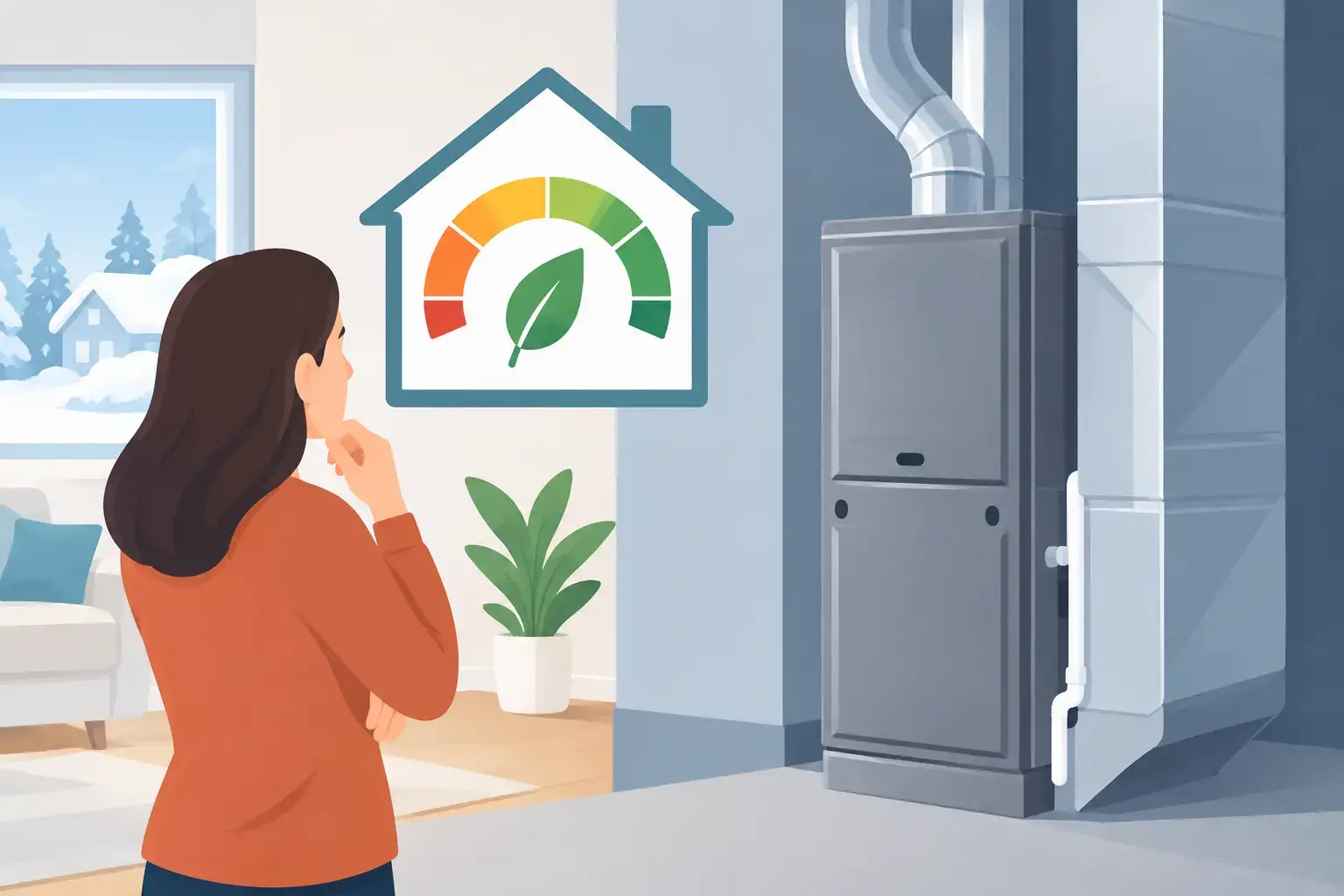
A furnace replacement is not just a question of buying the highest efficiency rating available. When deciding how to choose furnace efficiency, New Jersey homeowners and property managers need to weigh the building itself, fuel costs, installation requirements, and how long they expect to keep the system. The right furnace should reduce waste without creating unnecessary upfront costs or reliability concerns.
A 95% efficient furnace can be an excellent investment in one property and an overreach in another. The difference comes down to the details a qualified HVAC technician sees during an on-site evaluation: ductwork, venting, insulation, occupancy, thermostat settings, and the condition of the existing system.
Start With AFUE, but Do Not Stop There
Furnace efficiency is typically measured by Annual Fuel Utilization Efficiency, or AFUE. This percentage estimates how much of the fuel your furnace turns into usable heat over a typical year. A furnace with 80% AFUE converts about 80 cents of every fuel dollar into heat, while the remaining 20 cents is lost through exhaust and normal operation.
Most modern gas furnaces fall into two broad categories. Standard-efficiency models are commonly around 80% AFUE. High-efficiency condensing furnaces are usually 90% AFUE or higher, with many reaching 95% to 98% AFUE.
A higher AFUE rating generally means lower fuel consumption, but it does not automatically mean the lowest overall ownership cost. The price difference between furnace models, the complexity of installation, and local natural gas rates all affect the real payback.
How to Choose Furnace Efficiency for Your Property
The first practical question is not, “What is the most efficient furnace?” It is, “What efficiency level fits this property and its heating needs?” A professional load calculation and equipment assessment provide a more reliable answer than choosing a model based on square footage alone.
For many New Jersey homes, a high-efficiency furnace makes sense because winters demand consistent heat. It can be especially worthwhile in a home with good insulation, properly sized ductwork, and plans for long-term ownership. The more the furnace runs over the years, the more opportunity there is for higher AFUE savings to add up.
However, an 80% AFUE furnace may still be the practical choice for certain replacement projects. If a property has an existing metal flue system in good condition and installing a condensing furnace would require major venting changes, drainage work, or structural modifications, the added installation cost can narrow the savings advantage. This is particularly relevant in older homes, multifamily properties, and commercial spaces with complicated mechanical layouts.
The best decision comes from comparing the complete project cost, not just the equipment price or AFUE label.
Understand the Installation Differences
High-efficiency furnaces recover additional heat from exhaust gases. As they do so, they create condensation that must be safely drained away. They also typically use PVC vent pipes rather than a traditional metal chimney or flue.
That design offers real efficiency benefits, but the installation has to be planned correctly. The system needs proper vent pipe routing, approved termination locations, correctly pitched drainage, and a condensate solution that works during freezing weather. A poorly installed 96% AFUE furnace will not provide the comfort, savings, or reliability you expect.
Standard-efficiency furnaces generally vent through a metal flue and do not produce condensate in the same way. Their installation can be simpler when an existing venting path is usable. Still, they require proper combustion air, vent sizing, and safety testing.
For homeowners, this is why a free estimate should include an on-site review rather than a quick quote based only on the old furnace’s model number. For property managers and commercial owners, it is equally important to evaluate access, tenant impact, roof or wall venting options, and drainage routing before selecting equipment.
Look Beyond AFUE at Comfort Features
Two furnaces with similar AFUE ratings can perform very differently. Efficiency measures fuel use, but comfort depends on how the furnace delivers heat throughout the building.
A single-stage furnace operates at full capacity whenever it turns on. It is often a dependable and budget-conscious option, particularly for smaller homes or properties with limited heating demands. The trade-off is that indoor temperatures can fluctuate more between cycles.
A two-stage furnace can operate at a lower output for much of the heating season and increase to full capacity during colder weather. This tends to provide steadier temperatures, quieter operation, and longer run times that distribute heat more evenly. Variable-speed or modulating systems offer even greater control by adjusting output and blower performance more precisely.
These upgraded systems can be a strong choice for larger homes, multi-level layouts, rooms that run cold, and properties where comfort is a major priority. They also pair well with compatible smart thermostats and zoning systems. But added features mean more sophisticated controls and components, so quality installation and regular maintenance matter even more.
Size the Furnace Correctly
Oversizing is one of the most common and costly furnace mistakes. A furnace that is too large can heat the space quickly, shut off too soon, and repeat the cycle throughout the day. This short cycling can create uneven temperatures, increase wear on components, and reduce the practical benefit of a high-efficiency model.
An undersized furnace has the opposite problem. It may run constantly during cold weather and still struggle to maintain the desired temperature. That puts comfort at risk and can lead to higher operating stress.
Proper sizing should be based on a heating load calculation that accounts for insulation levels, windows, air leakage, ceiling height, orientation, duct design, and local climate conditions. A well-sized 80% furnace can outperform an oversized 96% furnace in comfort and real-world operation.
This is also the time to inspect ductwork. Leaky, undersized, or poorly balanced ducts can waste heated air before it reaches the rooms where you need it. In some homes, duct improvements make as much difference as the furnace upgrade itself.
Calculate Payback Based on Your Situation
Higher efficiency usually saves fuel, but the financial return varies. Consider how much you currently spend on gas, how often the building is occupied, the expected lifespan of the new furnace, and the installed price difference between efficiency levels.
For example, moving from an 80% AFUE furnace to a 96% AFUE furnace reduces fuel waste significantly. Yet a household with low gas use may see a slower payback than a large family home that heats every day through the winter. A commercial building with extended operating hours may have a stronger case for investing in higher efficiency, especially when energy costs are a major operating expense.
Available utility rebates, manufacturer promotions, and tax incentives can also change the calculation. These programs often have equipment requirements and documentation rules, so confirm eligibility before making a final equipment decision. Do not choose a furnace solely because of a rebate. The system still needs to fit the property and be installed to manufacturer specifications.
Factor in Maintenance and Reliability
Every furnace benefits from annual maintenance, regardless of its AFUE rating. A seasonal tune-up helps verify safe operation, checks airflow and combustion, cleans critical components, and identifies small issues before they become a no-heat emergency.
High-efficiency furnaces have additional components such as condensate drains, pressure switches, and specialized venting that require knowledgeable service. That does not make them unreliable. It means the installer and service provider should understand the system, use quality materials, and stand behind the work with clear warranty coverage.
For landlords and commercial property managers, maintenance planning is part of efficiency planning. A furnace that operates efficiently but fails during a cold weekend can create far greater costs than its energy savings. Choose equipment with a support plan that fits the property’s needs and keeps downtime to a minimum.
Questions to Ask Before You Buy
Before approving a furnace replacement, ask the contractor what AFUE range is appropriate for your building and why. Ask whether the estimate includes a load calculation, ductwork assessment, venting changes, thermostat compatibility, condensate drainage, permits, and startup testing.
You should also ask how the proposed furnace will affect comfort, what warranty applies to both equipment and labor, and what maintenance the manufacturer recommends. Clear answers are a good sign that the proposal is built around your property rather than a one-size-fits-all equipment sale.
Tamco Air helps New Jersey homeowners and commercial property owners compare furnace options based on comfort goals, building conditions, budget, and long-term operating costs. A careful evaluation now can help you avoid paying for efficiency you cannot use or settling for a system that costs more to run than it should.
The right furnace efficiency is the one that matches your building, is sized and installed correctly, and gives you dependable heat when New Jersey winter puts it to work.