



 27 Jul 2026
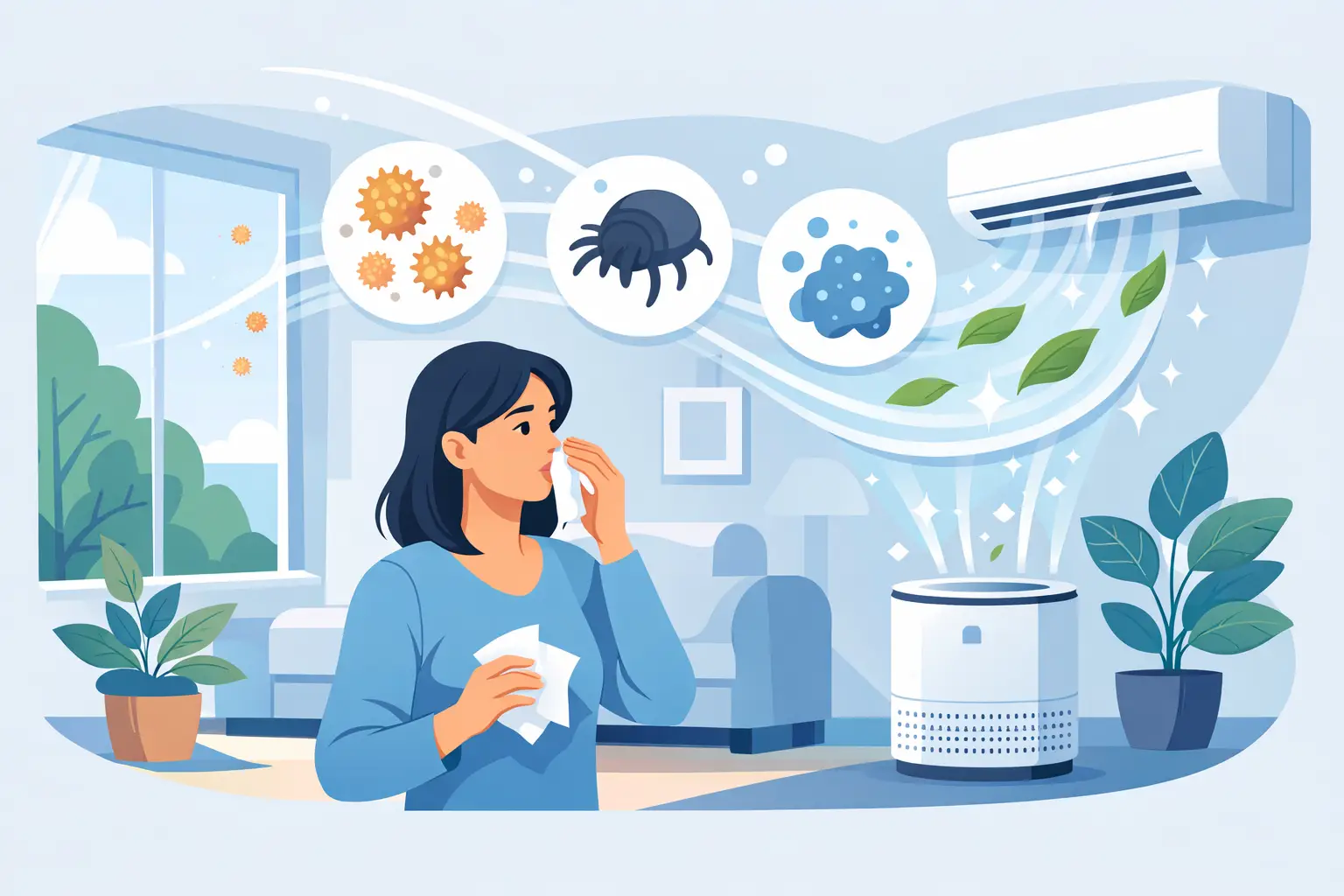
A home can look clean and still leave you sneezing at the kitchen table, waking congested, or reaching for allergy medicine every afternoon. Improving indoor air quality for allergies means addressing what is moving through your air, where it settles, and whether your HVAC system is helping control it or circulating it.
For New Jersey homeowners and property managers, the answer is rarely one product or one cleaning session. Seasonal pollen, pet dander, dust mites, mold spores, and outdoor pollution can enter and remain indoors in different ways. A practical plan combines source control, cleaning habits, the right filtration, and a properly maintained heating and cooling system.
What Is Triggering Allergy Symptoms Indoors?
Allergy symptoms do not always start with an obvious dusty room. Pollen can come inside on shoes, clothing, pets, and open windows. Pet dander is lightweight and can remain airborne before collecting on furniture, rugs, and supply vents. Dust mites thrive in bedding, upholstered furniture, and carpeting, while mold can grow where moisture is consistently present.
Your HVAC system may carry some of these particles through the home, particularly when filters are overdue for replacement, return vents are dirty, or ductwork has leaks. This does not mean duct cleaning is automatically the solution. The better first step is identifying the likely source and confirming that the system is filtering and moving air as designed.
In commercial spaces, the pattern can be different. Occupant density, frequent door traffic, carpeting, stored materials, and inconsistent maintenance can all add to the particle load. Offices and apartment buildings may also have problem areas caused by localized moisture, poorly balanced airflow, or equipment that no longer matches the building’s needs.
Improve Indoor Air Quality for Allergies at the Source
The most effective allergy strategy begins before air reaches the filter. Reducing what enters and accumulates in the building lowers the burden on your HVAC equipment and makes every other step more effective.
Keep windows closed on high-pollen days, especially in the morning and when the wind is strong. If someone in the household has spent time outdoors, changing clothes and washing up can prevent pollen from spreading to bedding and upholstered furniture. Wiping pets down after walks can also make a noticeable difference during peak allergy season.
Focus cleaning efforts on the places allergens collect most easily. Vacuum carpets and area rugs with a sealed, high-efficiency vacuum, damp-dust hard surfaces instead of stirring particles into the air, and wash bedding regularly in hot water when dust mites are a concern. Heavy drapes, decorative pillows, and cluttered shelves may look harmless, but they can hold a surprising amount of dust.
If a room has a persistent musty smell, visible staining, or recurring condensation, treat moisture as the priority. Cleaning surface mold without correcting a leak, drainage issue, or humidity problem only delays its return. A qualified professional can help determine whether the issue is HVAC-related, plumbing-related, or caused by building conditions.
Choose HVAC Filtration That Your System Can Handle
A quality HVAC filter is one of the most practical tools for allergy control, but the highest-rated filter is not automatically the best choice. Filters with higher MERV ratings capture smaller particles more effectively, including many common airborne allergens. However, a filter that is too restrictive for an older or improperly sized system can reduce airflow and put added strain on the equipment.
For many homes, a properly fitted MERV 8 to MERV 11 filter offers a solid balance between filtration and airflow. Some systems can support MERV 13 filtration, which can capture finer particles, but that decision should be based on the equipment, duct design, blower capacity, and manufacturer guidance. A technician can evaluate the system rather than relying on the label at a big-box store.
Replace filters on schedule, not only when they look dark. A one-inch filter may need attention every one to three months depending on pets, occupancy, construction dust, and allergy sensitivity. Media filters with deeper cabinets often last longer and provide more surface area, making them a strong option for homes that need better filtration without frequent changes.
Portable HEPA air cleaners can help in targeted spaces such as bedrooms, nurseries, and home offices. They are particularly useful when one person has stronger symptoms than the rest of the household. The trade-off is coverage: a small unit will not clean the entire home, and it should be sized for the actual room, not the whole floor plan.
Keep Humidity in the Right Range
Humidity affects more than comfort. When indoor air stays too humid, dust mites and mold have better conditions to grow. When it becomes extremely dry, irritated nasal passages and throat discomfort can make allergy symptoms feel worse.
A relative humidity level around 30% to 50% is a useful target for most homes. In New Jersey summers, air conditioning helps remove moisture, but an oversized air conditioner may cool the house too quickly and shut off before adequately dehumidifying. In basements, a dedicated dehumidifier may be needed even when the rest of the home feels comfortable.
During winter, humidifiers can help with dry-air discomfort, but they must be managed carefully. Over-humidifying a home can create window condensation and hidden moisture problems. If you use a portable humidifier, clean it as directed and use fresh water to avoid introducing contaminants into the room.
Do Not Overlook Airflow, Ducts, and Maintenance
Allergy control depends on air moving where it should. Closed or blocked supply vents, furniture covering returns, and dirty blower components can limit circulation and make certain rooms feel stuffy. Uneven temperatures may also point to duct leakage, poor balancing, insulation gaps, or an HVAC system that needs a closer inspection.
Duct cleaning can be appropriate after major renovation work, a pest issue, visible contamination, or an unusual buildup confirmed during an inspection. It is not a substitute for filtration, moisture control, and routine service. If ducts are leaking, sealing and repairing them may do more for comfort and cleanliness than cleaning alone.
Routine HVAC maintenance matters because a system operating under strain can deliver weaker airflow and less consistent humidity control. During a service visit, technicians can check filters, coils, drain lines, blower performance, refrigerant operation, and overall system condition. For homes with recurring allergy complaints, this is also the right time to discuss upgraded media filtration, whole-home air cleaners, humidity equipment, or zoning adjustments.
When Allergy Symptoms Point to an HVAC Problem
Some symptoms are personal and seasonal, but certain household patterns deserve attention. If several people feel worse in one room, symptoms improve when they leave the building, or odors appear whenever the system turns on, it is worth investigating the indoor environment. The same is true when you notice excessive dust near vents, recurring condensation, weak airflow, or a sudden increase in filter buildup.
For property managers, tenant complaints about stale air or recurring odors should be handled promptly. A site assessment can identify whether the cause is ventilation, equipment performance, moisture, filtration, or a maintenance gap. The goal is not to add equipment unnecessarily. It is to correct the condition that is affecting comfort and air quality.
Tamco Air helps New Jersey homeowners and commercial property owners evaluate HVAC performance and practical indoor air quality options. The right solution may be as simple as correcting a filter setup and maintenance schedule, or it may call for equipment designed to improve filtration and humidity control across the building.
If allergies are making your own home or workplace less comfortable, start with the basics you can see: filters, moisture, cleaning habits, and blocked vents. Then let the way the building feels guide the next step. Clean, balanced, well-maintained air is not a luxury when people live and work there every day.