


 09 Jun 2026
The best heating and air conditioning system for a residential home is the system that fits the home’s climate, layout, insulation, ductwork, energy costs, and comfort expectations. There is no universal “best” HVAC setup for every house. A high-efficiency heat pump may be the strongest option for one property, while another home may perform better with a gas furnace and central air conditioner, a dual-fuel system, or ductless mini-splits.
A residential HVAC system should do more than heat in winter and cool in summer. It should maintain stable indoor temperatures, manage humidity, move air evenly, operate efficiently, and support good indoor air quality. The wrong system can create uneven comfort, high utility bills, noisy operation, short cycling, excessive repairs, and poor long-term performance.
Choosing the right system starts with understanding how each option works and where it performs best.
Central Air Conditioner and Gas Furnace
A central air conditioner paired with a gas furnace is one of the most common HVAC systems for residential homes. The furnace provides heating during colder months, while the central AC handles cooling during summer. Both systems usually share the same ductwork, blower, thermostat, and air distribution network.
This setup is often a strong choice for homes in colder climates where natural gas is available and affordable. Gas furnaces produce strong heat quickly, which makes them reliable during freezing weather. Central air conditioning then provides whole-home cooling through the same duct system.
Main advantages include:
- Strong heating performance in cold weather
- Reliable whole-home cooling
- Compatibility with existing ductwork
- Fast temperature recovery
- Multiple efficiency levels available
- Familiar service and repair process
- Good comfort when properly sized
Potential limitations include:
- Requires ductwork
- Uses separate heating and cooling equipment
- Gas furnace requires safe combustion venting
- Older ducts can reduce efficiency
- Poor sizing can cause short cycling or uneven temperatures
- Indoor air may become dry in winter without humidity control
A furnace and central AC system is often best for homes that already have good ductwork, need dependable heating in winter, and have access to natural gas. It is a practical, proven option when installation quality and system sizing are handled correctly.
Heat Pump System
A heat pump provides both heating and cooling using the refrigeration cycle. In summer, it works like an air conditioner by moving heat out of the home. In winter, it reverses operation and moves heat into the home.
Heat pumps are becoming increasingly popular for residential homes because they can provide efficient year-round comfort with one system. They are especially effective in moderate climates, and modern cold-climate heat pumps can perform well in cooler regions when properly selected.
Main advantages include:
- Heating and cooling from one system
- High energy efficiency
- No combustion inside the home
- Good cooling and humidity control
- Available in ducted and ductless designs
- Lower operating costs in many climates
- Works well with smart thermostats and zoning
Potential limitations include:
- Performance depends on outdoor temperature
- May need backup heat in very cold climates
- Higher upfront cost for advanced models
- Requires correct sizing and airflow
- Existing ductwork must be evaluated
- Poor installation can reduce expected savings
A heat pump is often the best residential HVAC system for homeowners who want efficient heating and cooling, especially where winters are mild to moderate or where electricity is cost-effective compared with gas or oil.
Dual-Fuel HVAC System
A dual-fuel system combines an electric heat pump with a gas furnace. The heat pump handles heating during mild and moderately cold weather. When temperatures drop and the heat pump becomes less efficient, the gas furnace takes over.
This setup is useful in regions with variable winters. It gives homeowners the efficiency of a heat pump during milder weather and the heating strength of a furnace during colder periods.
Main advantages include:
- Efficient heating in mild weather
- Strong backup heating in extreme cold
- Automatic switching between systems
- Whole-home heating and cooling
- Lower gas use compared with furnace-only heating
- Good comfort flexibility
- Better performance in mixed climates
Potential limitations include:
- Higher installation cost
- More complex controls
- Requires both electric and gas infrastructure
- Needs proper balance point setup
- Maintenance involves both systems
A dual-fuel system is often best for homes in climates with both mild and very cold heating periods. It is a strong option for homeowners who want efficiency without sacrificing comfort during freezing weather.
Ductless Mini-Split System
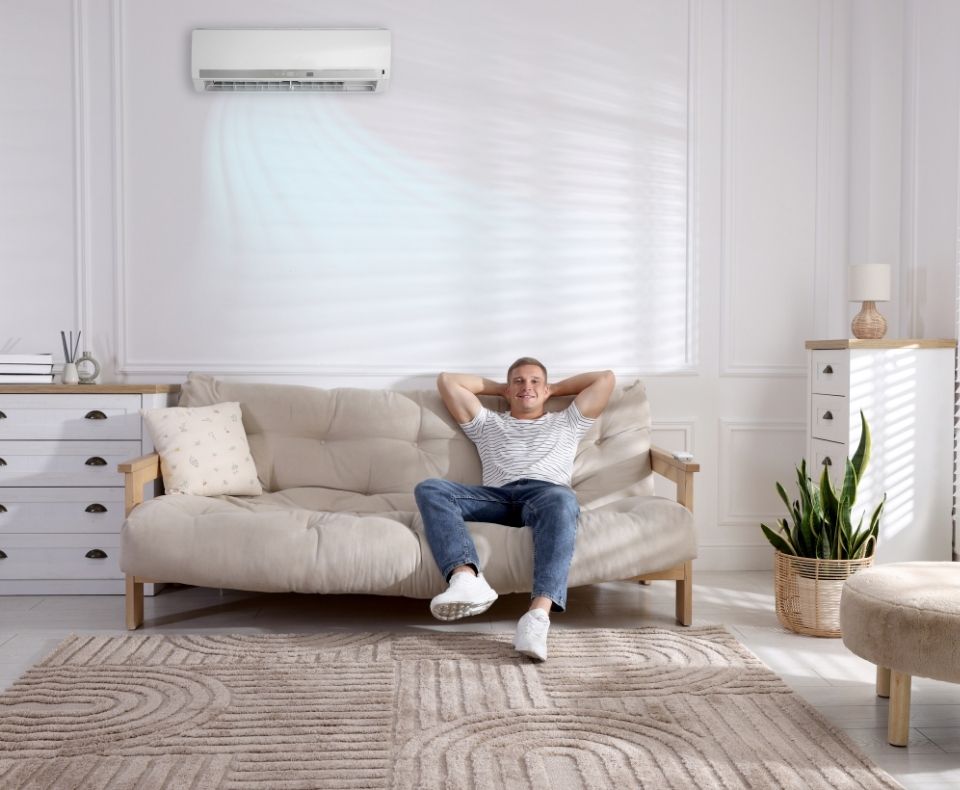
A ductless mini-split system provides heating and cooling without traditional ductwork. It uses an outdoor unit connected to one or more indoor air handlers. Each indoor unit serves a specific room, zone, or area.
Mini-splits are especially useful for older homes without ducts, room additions, garages, finished basements, sunrooms, workshops, and rooms that are difficult to heat or cool with a central system.
Main advantages include:
- No ductwork required
- Zoned comfort by room or area
- High energy efficiency
- Quiet operation
- Strong solution for additions and problem rooms
- Heating and cooling from one system
- Less energy loss than leaky duct systems
- Flexible installation options
Potential limitations include:
- Indoor wall units are visible
- Multiple zones increase project cost
- Filters require regular cleaning
- Placement affects comfort and appearance
- Not always ideal as the only system for large homes
- Requires good design to avoid underheating or overcooling rooms
A ductless mini-split may be the best option for homes without existing ducts or for targeted comfort problems. It can also supplement a central HVAC system when one area of the home never stays comfortable.
Packaged HVAC System
A packaged HVAC system contains heating and cooling components in one outdoor cabinet. Instead of having separate indoor and outdoor units, the main equipment is located outside, often beside the home or on the roof. Conditioned air is delivered through ductwork.
Packaged systems are common in homes with limited indoor mechanical space. They may include electric cooling with gas heat, heat pump operation, or all-electric heating and cooling.
Main advantages include:
- Saves indoor space
- Heating and cooling in one cabinet
- Easier access for some service tasks
- Useful for homes without basements or large utility rooms
- Can connect to existing ductwork
- Practical for certain regional home designs
Potential limitations include:
- Outdoor exposure can affect equipment over time
- Requires properly sealed duct connections
- May be less flexible than split systems
- Placement must allow airflow and service access
- Not suitable for every residential layout
A packaged system may be best for homes where indoor equipment space is limited or where the existing HVAC setup already uses packaged equipment.
Geothermal Heat Pump
A geothermal heat pump uses stable underground temperatures to provide heating and cooling. Instead of exchanging heat with outdoor air, it exchanges heat with the ground through buried loops.
Geothermal systems can be highly efficient and durable, but they require more complex installation and a larger upfront investment. The ground loop design, soil conditions, property size, and installation method all affect feasibility and cost.
Main advantages include:
- Very high energy efficiency
- Stable performance in different weather
- Long equipment lifespan
- Lower operating costs
- Quiet operation
- Heating and cooling from one system
- Reduced exposure to outdoor temperature extremes
Potential limitations include:
- High upfront cost
- Requires suitable land or drilling access
- More complex installation
- Ground loop design is critical
- Longer payback period
- Not practical for every property or budget
Geothermal can be excellent for homeowners planning long-term ownership and prioritizing maximum efficiency. For many residential projects, however, standard heat pumps, furnaces, dual-fuel systems, or ductless mini-splits are more practical.
Which HVAC System Is Best for Most Homes?
For many residential homes, the best HVAC system is either a high-efficiency heat pump or a central air conditioner with a gas furnace. The right choice depends on climate, fuel prices, existing ductwork, budget, and how the home is used.
A heat pump is often best when:
- Winters are mild or moderate
- You want one system for heating and cooling
- Electricity rates are reasonable
- You want to reduce combustion-based heating
- The home has good ductwork or can use ductless zones
- Energy efficiency is a priority
A gas furnace and central AC system is often best when:
- Winters are cold
- Natural gas is available and affordable
- The home already has good ductwork
- Strong heating output is important
- You prefer separate heating and cooling equipment
- The existing system already uses this configuration
A ductless mini-split is often best when:
- The home has no ductwork
- You are conditioning an addition
- One room is consistently too hot or too cold
- Zoned comfort is important
- You need a flexible retrofit solution
- You want to avoid duct installation
A dual-fuel system is often best when:
- The climate has both mild and very cold heating periods
- You want heat pump efficiency with gas furnace backup
- You already have gas service
- Comfort during extreme cold is a priority
- You want automatic fuel flexibility
The best decision is not based only on equipment type. It depends on how well the system matches the home’s actual heating and cooling load.
Key Factors When Choosing a Residential HVAC System
The best HVAC system should be selected based on the property, not only on brand, price, or efficiency rating. A high-end system can still perform poorly if it is oversized, undersized, poorly installed, or connected to weak ductwork.
Important selection factors include:
- Local climate
- Home square footage
- Ceiling height
- Insulation quality
- Window type and sun exposure
- Existing ductwork condition
- Fuel availability
- Electricity and gas costs
- Humidity levels
- Number of floors
- Room layout
- Indoor air quality needs
- Noise expectations
- Budget and long-term operating cost
- Maintenance requirements
A professional HVAC evaluation should include load calculation, duct inspection, equipment sizing, airflow review, and a discussion of comfort goals. TAMCO provides residential HVAC services for homeowners who need help with heating, cooling, installation, repair, and system planning.
Why Correct HVAC Sizing Matters
Correct sizing is one of the most important parts of choosing a residential heating and air conditioning system. A system that is too large or too small can create long-term comfort and efficiency problems.
An oversized system may:
- Short cycle
- Create uneven temperatures
- Reduce humidity control
- Increase wear on components
- Waste energy
- Make the home feel less comfortable
- Turn on and off too frequently
An undersized system may:
- Run constantly
- Struggle during extreme weather
- Fail to reach the thermostat setting
- Increase energy use
- Wear out faster
- Leave rooms too hot or too cold
- Reduce system lifespan
HVAC sizing should not be based only on square footage. A proper load calculation considers insulation, windows, air leakage, ceiling height, climate, home orientation, number of occupants, and ductwork. This helps the contractor choose equipment that matches the real heating and cooling needs of the home.
Ductwork Can Make or Break the System
Ductwork is often the hidden reason a heating and cooling system performs poorly. Even the best equipment cannot deliver proper comfort if the ducts are leaking, undersized, poorly balanced, or badly designed.
Duct problems can cause:
- Weak airflow
- Hot and cold rooms
- High energy bills
- Noisy operation
- Dust problems
- Poor indoor air quality
- Longer system runtimes
- Reduced equipment lifespan
Before installing a new central HVAC system, the ductwork should be inspected. If ducts are damaged, disconnected, undersized, or poorly sealed, new equipment may not solve the comfort problem.
For homes without ducts, ductless mini-splits may be more practical than adding a full duct system. For homes with existing ducts, sealing, repairs, resizing, or balancing may improve comfort and efficiency.
Energy Efficiency Ratings to Compare
Efficiency ratings help compare HVAC systems, but they should not be the only decision factor. A more efficient system can reduce operating costs, but only if it is correctly sized, installed, and maintained.
Important ratings include:
- SEER2 for air conditioning cooling efficiency
- HSPF2 for heat pump heating efficiency
- AFUE for gas furnace heating efficiency
- ENERGY STAR certification for qualifying equipment
Higher efficiency equipment usually costs more upfront. The value depends on climate, utility prices, system usage, insulation, and how long you plan to stay in the home.
A high-efficiency system may be worth it when:
- Heating or cooling usage is high
- Utility rates are expensive
- The current system is old and inefficient
- You plan long-term ownership
- Rebates or incentives are available
- Comfort and humidity control are priorities
However, efficiency should be balanced with installation quality, repairability, duct condition, maintenance cost, and total cost of ownership.
Single-Stage, Two-Stage, and Variable-Speed Systems
Modern HVAC systems may use single-stage, two-stage, or variable-speed technology. This affects comfort, noise, humidity control, energy use, and system lifespan.
Single-stage systems operate at full capacity whenever they turn on. They usually cost less upfront but provide less precise comfort.
Two-stage systems can run at a lower stage during mild conditions and a higher stage during extreme demand. This improves comfort and efficiency compared with basic single-stage equipment.
Variable-speed systems can adjust output more precisely. They often provide steadier temperatures, quieter operation, longer cycles, and improved humidity removal.
In general:
- Single-stage: lower upfront cost, basic operation
- Two-stage: better comfort and moderate efficiency improvement
- Variable-speed: strongest comfort control, quieter performance, higher upfront cost
For homeowners focused on quiet operation, humidity control, and steady comfort, two-stage or variable-speed systems are often worth considering.
Indoor Air Quality and Comfort Features
The best HVAC system should also support indoor air quality. Heating and cooling equipment moves air throughout the home, so filtration, humidity control, ventilation, and airflow all matter.
Useful comfort and air quality features may include:
- High-quality air filtration
- Whole-home dehumidifier
- Humidifier for dry winter air
- UV light near coils
- Fresh air ventilation
- Smart thermostat
- Zoning system
- Variable-speed blower
- Duct sealing
- Air balancing
Not every home needs every upgrade. A humid climate may benefit from better dehumidification. A dry climate may need winter humidification. A home with pets or allergies may need improved filtration. The system should be designed around the actual comfort issues in the house.
Best HVAC System by Home Situation
Different homes need different HVAC solutions. The best system depends on the building, climate, comfort problems, and budget.
For a newer home with good ductwork, a high-efficiency heat pump or central AC with a furnace can work well.
For an older home without ductwork, ductless mini-splits are often the most practical option.
For a home in a cold climate, a gas furnace with central AC or a dual-fuel system may provide better winter comfort.
For a home with one problem room, a single-zone mini-split may solve the issue without replacing the whole system.
For a homeowner focused on long-term efficiency, a variable-speed heat pump or geothermal system may be worth evaluating.
For a homeowner with a tighter budget, a properly sized single-stage or two-stage system may be more practical than the most advanced model.
The best HVAC system is not automatically the most expensive one. It is the system that solves the home’s actual comfort and efficiency problems.
Installation Quality Is as Important as Equipment Choice
Even excellent HVAC equipment can perform poorly if installation is rushed or incorrect. Installation quality affects airflow, refrigerant charge, duct connections, electrical safety, drainage, venting, thermostat control, and efficiency.
A professional installation should include:
- Proper load calculation
- Correct equipment sizing
- Ductwork inspection
- Refrigerant charging according to specifications
- Electrical safety checks
- Condensate drainage setup
- Venting inspection for combustion systems
- Thermostat setup
- Airflow testing
- System performance verification
Many comfort problems begin with poor installation, not bad equipment. A lower-efficiency system installed correctly can outperform a premium system installed poorly.
Final Recommendation
The best heating and air conditioning system for a residential home depends on the home’s climate, size, insulation, ductwork, fuel availability, and comfort goals. For many homes, the strongest options are a high-efficiency heat pump, a gas furnace with central air conditioning, a dual-fuel system, or ductless mini-splits.
Choose a heat pump if you want efficient year-round heating and cooling. Choose a gas furnace with central AC if you need strong heating in a cold climate and already have ductwork. Choose ductless mini-splits if your home lacks ducts or needs zoned comfort. Choose dual fuel if you want heat pump efficiency with gas furnace backup for colder weather.
The best HVAC system is not simply the most powerful or most expensive option. It is the one that is correctly sized, professionally installed, matched to the home, and maintained properly.