


 22 Apr 2026
Choosing the right furnace is one of the most important decisions for maintaining comfort during colder months. In the United States, the three main types of furnaces are gas, electric, and oil, each with its own advantages, costs, and ideal use cases.
At a basic level, all furnaces perform the same function — they generate heat and distribute it throughout your home. The difference lies in how they produce that heat, how efficient they are, and how much they cost to operate.
As heating specialist Andrew Collins explains, “The best furnace isn’t the same for every home. It depends on fuel availability, climate, and long-term operating costs.” Understanding these differences helps you choose the right system for your needs.
How Furnaces Work in General
Before comparing types, it’s helpful to understand how furnaces operate.
A typical furnace:
- Receives a signal from the thermostat
- Generates heat using a fuel source or electricity
- Transfers heat through a heat exchanger or heating element
- Uses a blower to distribute warm air through ductwork
This process repeats as needed to maintain the desired indoor temperature.
Gas Furnaces
Gas furnaces are the most common heating systems in the U.S. because natural gas is widely available and relatively affordable.
How Gas Furnaces Work
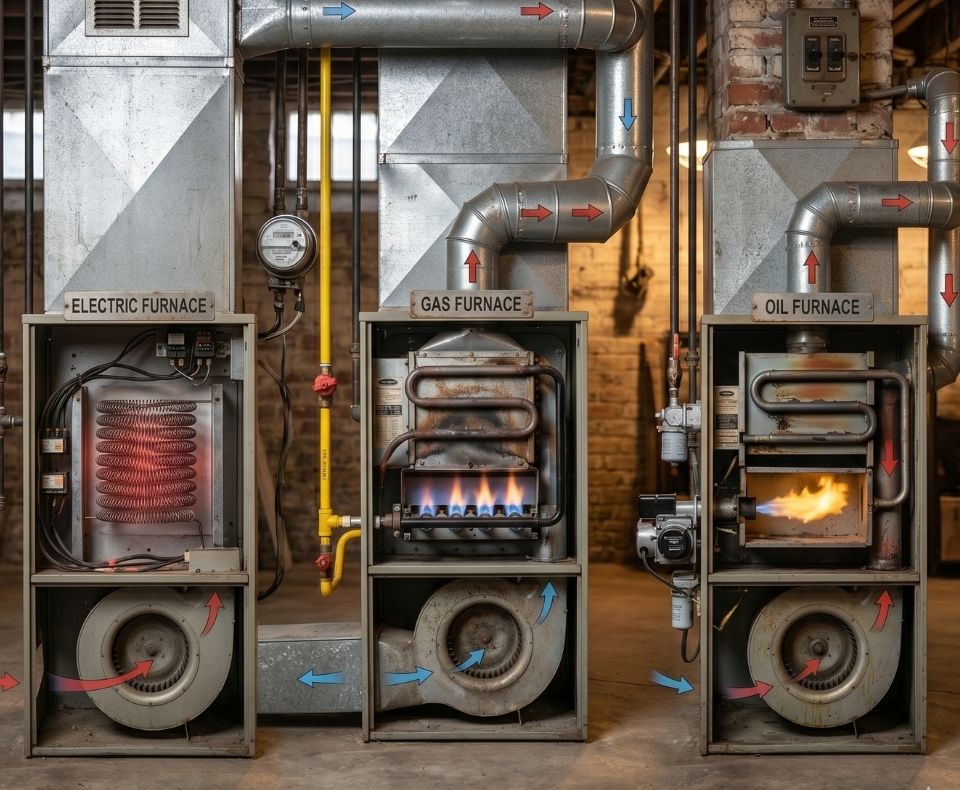
Gas furnaces burn natural gas or propane to create heat. The heat exchanger warms the air, and the blower distributes it throughout the home.
Advantages of Gas Furnaces
- Lower operating costs in most regions
- Fast and powerful heating
- High efficiency options (90%–98% AFUE)
- Widely available fuel source
Disadvantages
- Higher upfront installation cost
- Requires gas line and proper ventilation
- Needs regular safety inspections
Gas furnaces are ideal for colder climates where strong, consistent heat is necessary.
Electric Furnaces
Electric furnaces use heating elements instead of combustion. They are often found in areas where natural gas is unavailable or electricity rates are competitive.
How Electric Furnaces Work
Electric current passes through heating elements, generating heat. Air is then blown over these elements and distributed through the home.
Advantages of Electric Furnaces
- Lower upfront cost
- Simple installation
- No combustion or gas emissions
- Minimal maintenance requirements
Disadvantages
- Higher operating costs in many areas
- Slower heating compared to gas systems
- Less efficient in extremely cold climates
Electric furnaces are best suited for mild climates or smaller homes.
Oil Furnaces
Oil furnaces are less common today but still used in regions without access to natural gas, particularly in parts of the Northeast U.S.
How Oil Furnaces Work
Oil is stored in a tank and burned inside the furnace to produce heat. The system then distributes warm air through ductwork.
Advantages of Oil Furnaces
- High heat output
- Reliable performance in very cold weather
- Does not require a gas line
Disadvantages
- Higher fuel costs
- Requires on-site fuel storage
- More maintenance due to soot buildup
- Less environmentally friendly
Oil furnaces are often used in older homes or rural areas.
Key Differences Between Furnace Types
Here’s a simple comparison to highlight the main differences:
Fuel Source
- Gas — Natural gas or propane
- Electric — Electricity
- Oil — Heating oil stored on-site
Installation Cost
- Gas — Medium to high
- Electric — Low
- Oil — Medium
Operating Cost
- Gas — Typically lowest
- Electric — Usually highest
- Oil — Varies, often high
Efficiency
- Gas — High (especially modern systems)
- Electric — Nearly 100% efficient at point of use
- Oil — Moderate to high
Maintenance
- Gas — Moderate
- Electric — Low
- Oil — Higher due to cleaning requirements
Which Furnace Is Best for Your Home?
The right furnace depends on several factors, including location, budget, and energy availability.
Gas furnaces are best if:
- You have access to natural gas
- You live in a cold climate
- You want lower long-term heating costs
Electric furnaces are best if:
- You live in a mild climate
- You want a lower upfront investment
- You prefer a simpler system
Oil furnaces are best if:
- Gas is not available
- You need strong heating in cold conditions
- You already have an oil system installed
Energy Efficiency Considerations
Furnace efficiency is measured using AFUE (Annual Fuel Utilization Efficiency).
- Standard systems — around 80% AFUE
- High-efficiency systems — 90% to 98% AFUE
Higher efficiency systems cost more initially but reduce energy bills over time. This is especially important in colder regions where heating systems run frequently.
Environmental Impact
Each furnace type has a different environmental footprint.
- Gas furnaces produce emissions but are cleaner than oil
- Electric furnaces produce no on-site emissions but depend on the power grid
- Oil furnaces have the highest emissions and require fuel storage
As energy standards evolve, many homeowners are shifting toward more efficient and environmentally friendly options.
Maintenance Requirements
Regular maintenance is essential regardless of furnace type.
Basic maintenance includes:
- Replacing air filters every 1–3 months
- Inspecting burners or heating elements
- Checking airflow and blower performance
- Scheduling annual professional inspections
Proper maintenance improves efficiency and extends system lifespan.
When to Replace Your Furnace
Furnaces typically last 15–20 years. Replacement may be necessary if:
- The system is aging and inefficient
- Repairs are becoming frequent
- Heating is inconsistent
- Energy bills are increasing
Upgrading to a modern system often improves comfort and reduces long-term costs.
FAQ
1. Which type of furnace is the most common in the U.S.?
Gas furnaces are the most widely used due to lower operating costs and availability.
2. Are electric furnaces more efficient than gas?
Electric furnaces are efficient at the point of use, but electricity often costs more than gas.
3. Why are oil furnaces less popular today?
Higher fuel costs, maintenance needs, and environmental concerns have reduced their popularity.
4. Which furnace is best for cold climates?
Gas and oil furnaces are better suited for colder regions due to stronger heat output.
5. How do I choose the right furnace?
Consider fuel availability, climate, budget, and long-term operating costs.