


 06 Oct 2025

Indoor air quality is one of the most overlooked determinants of human health. Ventilation systems are the primary mechanism that controls how much clean air circulates inside homes, offices, and commercial spaces. The way air moves, exchanges, and is filtered directly influences humidity, pollutant levels, and overall comfort. When properly designed and maintained, ventilation can reduce disease risks, improve concentration, and even enhance productivity.
Understanding Ventilation and Its Role in Indoor Air Quality
Ventilation is the process of exchanging indoor air with fresh outdoor air to dilute and remove contaminants. In modern, energy-efficient buildings that are tightly sealed, natural air leakage is minimal, so mechanical ventilation systems are critical for maintaining acceptable indoor air quality. Properly designed ventilation systems ensure that pollutants such as dust, smoke, formaldehyde, and volatile organic compounds are continuously flushed out rather than trapped inside.
The most important metrics that define ventilation effectiveness are the air exchange rate, airflow patterns, and distribution balance. A low exchange rate results in the buildup of pollutants, while improper airflow can cause cross-contamination between rooms. Balanced airflow ensures that air travels from clean zones — like living rooms or offices — to areas with higher pollutant loads, such as kitchens or bathrooms.
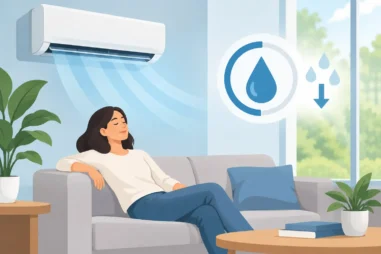
Humidity control is another key aspect. When indoor humidity exceeds 60%, mold growth accelerates, and dust mites thrive, leading to allergies and respiratory problems. Too little humidity, on the other hand, dries out mucous membranes, increasing susceptibility to infections. A well-tuned ventilation system keeps humidity in the optimal 40–60% range, supporting both comfort and health.
According to indoor air quality researchers, raising ventilation rates has consistently been shown to improve perceived freshness of air and reduce common complaints like headaches, fatigue, and eye irritation. The effect extends beyond comfort — higher air exchange rates have been linked to fewer sick days and improved work performance.
Health Effects of Poor Ventilation
Insufficient ventilation affects both short-term wellbeing and long-term health. In poorly ventilated environments, carbon dioxide levels can rise quickly, leading to drowsiness and reduced cognitive function. People working in such environments often describe symptoms such as throat irritation, dizziness, or difficulty concentrating — a cluster commonly referred to as “sick building syndrome.”
Over time, the accumulation of fine particles, nitrogen dioxide, and volatile organic compounds contributes to respiratory inflammation, worsened asthma, and allergies. Children and the elderly are particularly sensitive to these pollutants. Studies of mechanically ventilated homes have shown that adding controlled ventilation dramatically reduces indoor particulate matter and the frequency of asthma flare-ups.
Ventilation also plays a vital role in infection control. In schools and offices, where people share enclosed spaces for long periods, efficient air exchange dilutes airborne pathogens, lowering the risk of viral transmission. This principle became widely recognized during the COVID-19 pandemic, when mechanical ventilation upgrades were shown to reduce infection rates significantly. Adequate airflow, combined with air filtration and UV-C disinfection, remains one of the most effective defenses against airborne illness.
Residential Ventilation Systems
Residential spaces rely on several types of systems to maintain healthy air:
-
Exhaust systems, such as kitchen or bathroom fans, remove stale or contaminated air.
-
Supply systems bring in filtered outdoor air to replace it.
-
Balanced systems combine both, maintaining neutral pressure inside the home.
-
Heat Recovery Ventilators (HRVs) and Energy Recovery Ventilators (ERVs) capture heat or energy from outgoing air to reduce energy loss.
For new homes, the most effective design is a balanced system with energy recovery. Tamco Air’s HVAC for New Construction service focuses on integrating such systems during the building phase, ensuring optimal airflow from the start.
System sizing and control are equally important. Too little airflow leads to pollutant accumulation, while excessive ventilation wastes energy. Smart controls using CO₂ or humidity sensors can automatically regulate ventilation intensity based on indoor conditions. Regular maintenance — such as coil cleaning for peak performance and fan motor services — ensures that ducts and components stay clean, preventing the system itself from becoming a pollution source.
In existing homes, retrofitting mechanical ventilation can be challenging due to lack of ducts or leaks in older structures. However, even partial upgrades or localized systems can significantly improve indoor air quality and comfort when properly designed.
Commercial Ventilation Systems and Air Quality
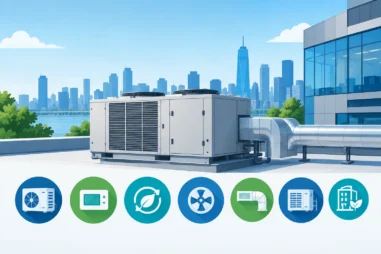
Commercial spaces such as offices, restaurants, and schools face more complex challenges. Higher occupancy densities mean greater CO₂ buildup and higher pollutant loads from equipment, cleaning products, and human activity. Ventilation systems must be designed to adapt dynamically to these variations.
Modern commercial HVAC designs often use demand-controlled ventilation based on CO₂ sensors or occupancy detection. When fewer people are present, airflow is reduced to save energy — when the space fills up, the system automatically increases ventilation to maintain healthy conditions. Tamco Air’s commercial fan motor services and new HVAC installation solutions support this approach, balancing energy efficiency with safety and comfort.
In large facilities, ventilation zones are separated to prevent cross-contamination between different areas. For example, air from restrooms or kitchens must never recirculate into occupied rooms. Regular duct inspections, commercial furnace services, and filter changes are essential to avoid microbial buildup in coils or ducts.
A well-maintained ventilation system not only improves air quality but also enhances the performance and lifespan of HVAC components. Dust-clogged coils, failing motors, or dirty filters force systems to work harder, consuming more electricity and shortening equipment life.
How Tamco Air Helps Improve Indoor Air Quality
Tamco Air takes a holistic approach to ventilation — designing, installing, and maintaining systems that actively protect occupants’ health.
For residential customers, services such as HVAC for new construction, furnace repair and installation, coil cleaning, and fan motor maintenance ensure that air flows smoothly and safely throughout the home.
For commercial clients, Tamco Air offers HVAC system design, AC and furnace optimization, and motor servicing tailored to large, complex buildings. These solutions ensure compliance with ventilation standards and support sustainable, energy-efficient operation.
Every system installed or serviced by Tamco Air is evaluated for both performance and health outcomes — ensuring the right balance between energy use and indoor air quality.
Best Practices for Healthy Ventilation
-
Follow ASHRAE standards for ventilation rates and system design.
-
Install sensors to monitor CO₂, humidity, and temperature in real time.
-
Replace filters and clean coils regularly.
-
Seal ductwork to prevent leaks and infiltration of unfiltered air.
-
Use balanced systems with heat or energy recovery to maintain efficiency.
-
Educate occupants on proper use of fans, vents, and air purifiers.
Implementing these practices keeps air fresh, reduces allergy and infection risks, and helps maintain comfortable indoor environments year-round.
Real-World Example
In a multi-family residential building, ventilation was initially limited to passive air leaks. After the installation of a balanced system with energy recovery, pollutant concentrations dropped by nearly 70%, humidity stabilized, and residents reported fewer respiratory issues. The project also demonstrated that with proper design and control, indoor air can be significantly improved without increasing energy consumption.
FAQ
How much ventilation does a home need?
It depends on the home’s size, number of occupants, and activities. Building standards like ASHRAE 62.2 recommend specific air changes per hour, but smart systems can adjust automatically to maintain comfort and efficiency.
Does ventilation increase energy bills?
Not necessarily. Systems with heat recovery capture warmth from exhaust air, reducing the need for additional heating or cooling. Proper design ensures energy efficiency and health protection go hand in hand.
Can I just open windows for ventilation?
Natural ventilation helps when outdoor air is clean, but it’s unpredictable and weather-dependent. Mechanical systems offer consistent airflow and filtration regardless of outside conditions.
How often should I clean filters and coils?
Filters typically need replacement every three to six months, while coils and ducts should be professionally cleaned at least once a year to prevent buildup and microbial growth. You can schedule a coil cleaning for peak performance to keep your system efficient and hygienic.
Are UV-C systems or purifiers necessary?
They can enhance protection — especially in high-traffic spaces — but they should supplement, not replace, proper ventilation. UV-C disinfection is particularly effective in commercial systems where continuous airflow passes through the HVAC unit.
Do I need professional help to install a new ventilation system?
Yes — proper installation ensures correct duct balance, energy recovery, and airflow patterns. Tamco Air provides expert HVAC for new construction to design systems optimized for indoor air quality from day one.
What if my furnace or fan motor stops circulating air properly?
Reduced airflow often signals a failing component or blocked ducts. Schedule professional furnace repair and installation or fan motor services to restore efficient ventilation and heating performance.
How can commercial buildings improve air quality for employees?
Large spaces require powerful, balanced systems with zoning and monitoring. Tamco Air specializes in commercial fan motor services, new HVAC installation, and commercial furnace services to maintain clean, efficient airflow in offices, restaurants, and retail locations.
Is it possible to upgrade ventilation without replacing the entire system?
Yes — partial upgrades like coil cleaning, duct balancing, or adding energy recovery modules can make a big difference. A Tamco Air technician can assess your setup and recommend improvements that enhance air quality without major reconstruction.