13 Oct 2026

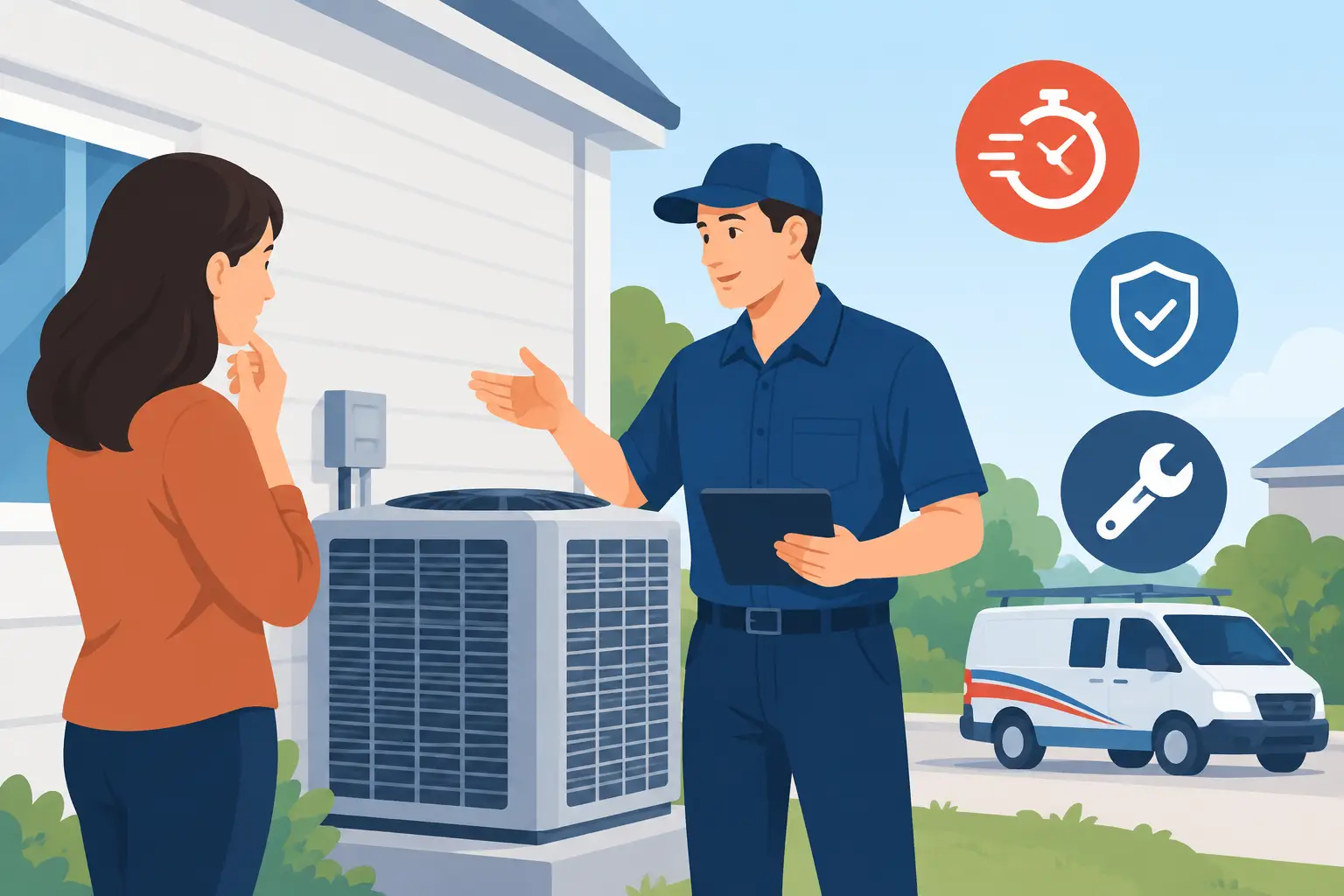
A furnace that stops during a freezing New Jersey night, an air conditioner that fails during a heat wave, or a rooftop unit that shuts down an occupied office cannot always wait for regular business hours. When you need to choose emergency HVAC service, the goal is not simply to find the first company that answers. You need a qualified local team that can respond safely, diagnose the real problem, and give you a clear path back to reliable comfort.
An emergency call can feel stressful because the stakes are immediate. Families may be without heat or cooling, tenants may be calling, inventory may be at risk, and a business may be losing productive hours. A few practical checks before you approve service can help you make a confident decision without delaying a necessary repair.
Know What Counts as an HVAC Emergency
Not every HVAC problem requires a middle-of-the-night repair, but some conditions should be addressed immediately. Loss of heat in cold weather is a serious concern, especially for homes with children, older adults, or vulnerable residents. A cooling failure can also become urgent during extreme heat, particularly where indoor temperatures are unsafe or medical needs are involved.
Call for emergency help right away if you smell gas, notice burning odors, see smoke, hear loud electrical buzzing, or have a carbon monoxide alarm activate. Leave the building if there is a suspected gas leak or carbon monoxide concern, then contact emergency services and your utility provider as appropriate. Do not try to restart equipment that may be unsafe.
For commercial properties, an HVAC emergency may also include a failed system in a server room, a restaurant refrigeration-related ventilation issue, a building-wide heating outage, or equipment failure affecting tenants and operations. Property managers need a provider that understands both the immediate repair and the communication needed to keep stakeholders informed.
Choose Emergency HVAC Service Based on Response, Not Promises
Many companies advertise emergency service, but availability can mean different things. Some answer calls after hours but schedule the repair for the next day. Others dispatch a technician for active heating, cooling, electrical, or safety-related failures. Ask directly: “Can you send a technician tonight?” and “What is the expected arrival window?”
A reliable provider should give a realistic response expectation instead of making vague promises. Traffic, weather, technician availability, and the number of active calls can affect arrival time. Honest communication matters more than an unrealistic guarantee.
For New Jersey homeowners and commercial operators, local coverage also makes a difference. A company that regularly serves your area is more likely to understand regional weather demands, common equipment types, local building conditions, and the urgency created by a sudden cold snap or summer heat event.
Verify the Qualifications That Protect Your Property
Emergency work should not mean cutting corners. HVAC systems combine electricity, fuel, refrigerant, combustion, drainage, and moving equipment. The technician working on your system needs the training and authority to diagnose the issue safely.
Before authorizing work, confirm that the company uses licensed or properly certified technicians, carries insurance, and works on your specific type of equipment. This is especially important for boilers, furnaces, heat pumps, ductless mini-splits, rooftop units, and larger commercial systems. A company that mainly handles basic residential tune-ups may not be the right fit for a complex building system or a multi-zone installation.
It is also reasonable to ask whether the technician will have common replacement parts available. No contractor can carry every part for every make and model, but a prepared emergency team should stock frequently needed items such as capacitors, contactors, igniters, filters, fuses, motors, and control components. If a specialty part must be ordered, the technician should explain temporary options, expected timing, and how to protect the system until the full repair is completed.
Look for Clear Diagnostic and Pricing Practices
During an emergency, it is tempting to approve any repair just to get the system running. That is understandable, but you still deserve a clear explanation. A professional technician should inspect the equipment, identify the likely cause, explain the recommended repair in plain language, and provide pricing before significant work begins.
After-hours service often carries a higher dispatch or diagnostic fee than a standard daytime appointment. That is normal because emergency availability requires staffing, scheduling flexibility, and faster mobilization. The key is transparency. Ask what the service call includes, whether the fee is applied toward repairs, and whether labor, parts, and taxes are shown separately.
Be cautious if a provider gives a firm repair price before anyone has inspected the unit, pressures you into a full replacement without diagnosing the issue, or cannot explain why a part failed. An older system may genuinely be near the end of its useful life, but replacement should be supported by the equipment’s condition, repair history, efficiency, safety, and the cost of keeping it operational.
Ask the Right Questions During the Call
You do not need HVAC expertise to make a smart call. Keep the conversation focused on availability, qualifications, and next steps. Before the technician arrives, ask whether you should shut off the system, turn off a breaker, or take any other safety precautions. Follow only the instructions you understand and can perform safely.
When the technician is on site, ask what caused the failure, whether the repair is a short-term or long-term solution, and what warning signs to watch for after service. If your system is repaired late at night, ask whether a follow-up visit or maintenance check is recommended during normal hours.
For property managers and commercial owners, request documentation of the issue, the repair performed, parts installed, and any recommendations that could prevent another disruption. Clear records help with budgeting, tenant communication, maintenance planning, and warranty support.
Consider Repair Versus Replacement Without Rushing
An emergency repair and a system replacement are not always opposing choices. Sometimes the right decision is to restore basic operation immediately, then schedule a detailed replacement consultation once the urgent situation has passed. This can be especially useful when a failed furnace, air conditioner, or rooftop unit is older, inefficient, or repeatedly breaking down.
Replacement may make more sense when a major component has failed, repairs are becoming frequent, parts are obsolete, or the system cannot reliably meet the building’s heating or cooling load. For a home, the decision may involve comfort, utility costs, and indoor air quality. For a commercial building, downtime, tenant needs, equipment access, zoning, and long-term operating costs may carry more weight.
The best provider will discuss practical options rather than forcing a one-size-fits-all answer. In some cases, repairing a newer system is clearly the responsible move. In others, investing in a properly sized replacement, ductless solution, or multi-zone design can reduce repeat emergencies and improve comfort for years.
Pay Attention to Communication After the Repair
The service experience should not end when the equipment restarts. A dependable HVAC company provides an invoice that explains the work, warranty details for covered parts or labor, and recommendations for keeping the system stable. If a temporary repair was made, you should know exactly what needs to happen next and when.
This follow-through is especially valuable in older homes, multi-family properties, and commercial facilities where one repair can reveal a larger issue with ductwork, controls, airflow, drainage, electrical capacity, or equipment sizing. Addressing those concerns on a planned schedule is usually less disruptive and less expensive than waiting for the next failure.
Reduce the Chance of the Next Emergency
No maintenance plan can prevent every unexpected failure, but routine service greatly improves the odds. Seasonal inspections can identify worn igniters, weak capacitors, dirty coils, clogged condensate drains, loose electrical connections, airflow restrictions, and safety concerns before they become urgent calls.
Homeowners can also replace filters on schedule, keep outdoor equipment clear of debris, and pay attention to changes in noise, airflow, cycling, or energy bills. Commercial properties benefit from documented maintenance schedules, filter management, equipment condition reports, and a clear process for reporting comfort issues before they spread across the building.
When comfort, safety, or operations are on the line, choose a provider that brings calm communication and proven technical capability to the call. Tamco Air is prepared to help New Jersey homeowners and businesses move from an HVAC disruption to a clear, dependable solution.