11 Oct 2026

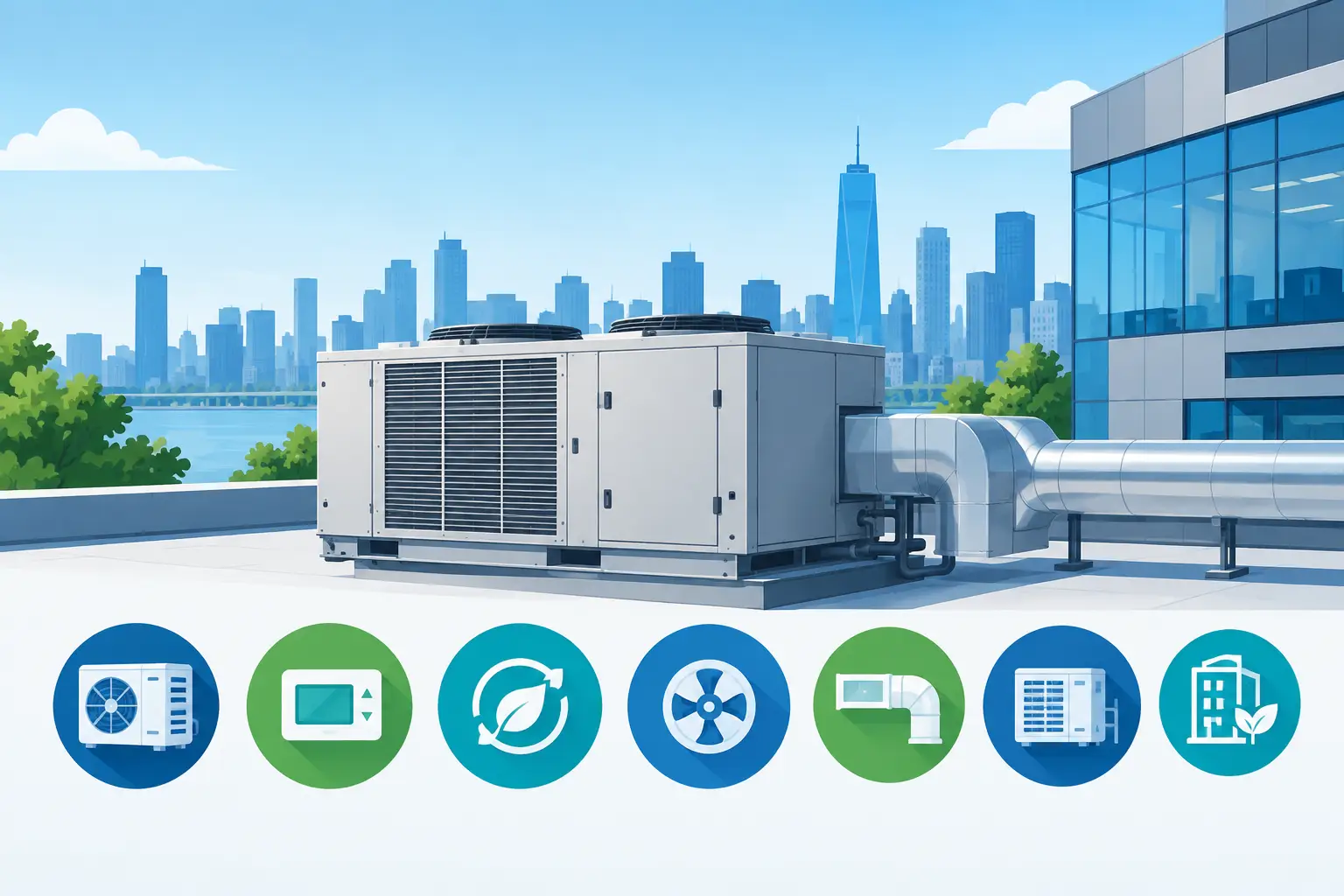
A commercial HVAC system that runs all day should do more than keep tenants from complaining. It should control operating costs, protect equipment, support healthy indoor air, and keep your building functioning through New Jersey’s humid summers and cold winters. The best commercial HVAC upgrades are not always the largest projects. Often, the right improvement is the one that addresses the specific cause of uneven temperatures, high utility bills, repeated service calls, or equipment downtime.
For property managers, office operators, retail owners, and multifamily building teams, the goal is simple: invest where it produces a measurable improvement without disrupting business more than necessary. A qualified on-site assessment helps determine whether your facility needs a targeted upgrade, a phased replacement plan, or a full system redesign.
1. High-Efficiency Rooftop Unit Replacement
Rooftop units are common in New Jersey commercial buildings because they are accessible, self-contained, and practical for offices, retail spaces, restaurants, and light industrial properties. But an aging unit can become expensive long before it stops running. Rising repair frequency, noisy operation, inconsistent cooling, and longer recovery times are all warning signs.
Replacing an older rooftop unit with a properly sized high-efficiency model can reduce energy use and improve occupant comfort. Modern equipment offers better compressor technology, variable-speed fan options, improved controls, and stronger dehumidification performance. Those features matter during a humid Middlesex County summer, when a space can feel uncomfortable even if the thermostat reads the right temperature.
The trade-off is upfront cost. A high-efficiency unit generally costs more than a basic replacement, and installation may require curb adaptation, electrical updates, or crane scheduling. However, if the existing unit is near the end of its service life, replacement can be more predictable and cost-effective than paying for repeated emergency repairs.
2. Building Automation and Smart HVAC Controls
Many commercial systems waste energy because they operate on a fixed schedule that no longer matches how the building is used. A professional office may be lightly occupied on Fridays. A retail store may have extended seasonal hours. An apartment common area may need conditioning around the clock, while other zones do not.
Smart thermostats, programmable controls, and building automation upgrades give property teams better visibility and control. They can schedule equipment by occupancy, adjust settings remotely, identify temperature trends, and receive alerts when a system is operating outside expected limits. For a larger building, integrating controls across multiple units can make it easier to manage comfort without manually checking each thermostat.
Controls are especially valuable when the equipment itself is still in good condition. They can extend the usefulness of a newer system by eliminating unnecessary runtime. Still, controls cannot correct a failing compressor, an undersized unit, or ductwork that is leaking conditioned air. They work best as part of a practical system plan, not as a substitute for needed mechanical repairs.
3. Variable Refrigerant Flow or Multi-Zone Systems
Buildings with different comfort needs across rooms, floors, or tenant spaces may benefit from a multi-zone solution. Variable refrigerant flow systems, often called VRF systems, use individual indoor units connected to an outdoor system. Each zone can be controlled separately, which helps eliminate the familiar problem of one office being too cold while another is too warm.
This upgrade is often a strong fit for professional offices, medical practices, mixed-use buildings, renovated spaces, and properties where adding or modifying ductwork would be difficult. It can also be useful when a building is expanding and the existing central system cannot serve the new area effectively.
Installation requires thoughtful design. Equipment capacity, refrigerant piping routes, electrical requirements, drainage, and future service access all need to be planned correctly. For a small space with straightforward needs, a conventional split system may be the more economical choice. For buildings with multiple zones and changing occupancy patterns, the added control can justify the investment.
4. Ventilation and Indoor Air Quality Improvements
Comfort is not only about temperature. Stuffy meeting rooms, lingering odors, excessive humidity, and recurring complaints about air freshness may point to a ventilation or indoor air quality issue. Commercial buildings need the right balance of outside air, filtration, humidity control, and airflow to support a healthier environment.
Common upgrades include higher-efficiency filtration where the system can support it, dedicated outdoor air equipment, energy recovery ventilators, ultraviolet treatment in appropriate applications, and humidity-control improvements. The right choice depends on the building type and the existing HVAC design. A medical office, daycare, apartment building, and warehouse do not have the same air quality priorities.
Before selecting a filter with a higher rating, have the system evaluated. Denser filters can create excess resistance if the fan and duct system are not designed for them. A professional assessment prevents an air-quality upgrade from causing reduced airflow, coil issues, or added strain on the equipment.
5. Ductwork Repairs, Sealing, and Airflow Balancing
Replacing HVAC equipment without addressing distribution problems can leave the same comfort issues in place. Leaky ducts, crushed flex duct, poorly located returns, damaged insulation, and unbalanced airflow can all force equipment to work harder while certain areas remain uncomfortable.
Duct sealing and airflow balancing are among the most practical commercial HVAC upgrades for buildings with hot and cold spots. During an assessment, a technician can measure airflow, static pressure, supply and return performance, and temperature differences between zones. The findings may show that a relatively focused correction can improve the performance of the whole system.
This work is particularly important after renovations, tenant build-outs, or changes in room use. A space that was once storage may now be an occupied office. Walls may have been added, and the original duct layout may no longer match the floor plan. Correcting airflow can be less disruptive and less expensive than immediately adding new equipment.
6. Energy Recovery Ventilation
Bringing fresh air into a commercial building is necessary, but conditioning that air can be costly. Energy recovery ventilation systems help transfer heat and, in some cases, moisture between outgoing and incoming air streams. That reduces the load on heating and cooling equipment while maintaining ventilation.
This is a worthwhile consideration for buildings with high ventilation demands, including offices, schools, fitness spaces, restaurants, and multifamily common areas. During winter, the system can recover heat from exhaust air. During summer, it can help reduce the burden of hot, humid outdoor air.
Energy recovery equipment is not a universal answer. The building needs adequate space, a suitable duct path, and a ventilation design that supports the upgrade. But where those conditions exist, it can deliver better air quality and lower conditioning costs at the same time.
7. Preventive Maintenance and Monitoring Upgrades
A maintenance agreement may not look like a capital upgrade, but it protects every investment you make in your HVAC system. Many costly commercial failures begin with smaller issues: dirty coils, worn belts, clogged drains, loose electrical connections, low refrigerant charge, or failing capacitors. Left unattended, those problems can lead to downtime during the busiest part of the season.
Adding remote monitoring or scheduled maintenance helps building operators catch problems earlier. It also creates a clearer record of equipment condition, repair history, and replacement timing. That information is valuable when planning budgets and avoiding last-minute decisions after a major failure.
For commercial properties, timing matters. Scheduling maintenance before peak heating and cooling seasons can reduce the risk of urgent disruptions. Tamco Air works with commercial clients to evaluate equipment condition, plan repairs or replacements, and complete work with minimal interruption to tenants and daily operations.
How to Prioritize Commercial HVAC Upgrades
Start with the issues that are costing your building the most. High utility bills may point to inefficient equipment, poor controls, duct leakage, or ventilation problems. Repeated comfort complaints may point to zoning or airflow issues. Frequent service calls on an older unit often signal that replacement planning should begin before an emergency forces the decision.
Ask for a clear evaluation of your current equipment, expected remaining life, repair history, energy concerns, and building use. A strong recommendation should explain what the upgrade solves, what it will not solve, and whether the work can be phased. For example, replacing the weakest rooftop units first may be more practical than replacing every unit at once.
The best choice is the one that fits your building, your budget, and your operating schedule. A well-planned HVAC upgrade creates a more comfortable space today while giving you fewer surprises when the weather changes.