


 12 Jun 2026
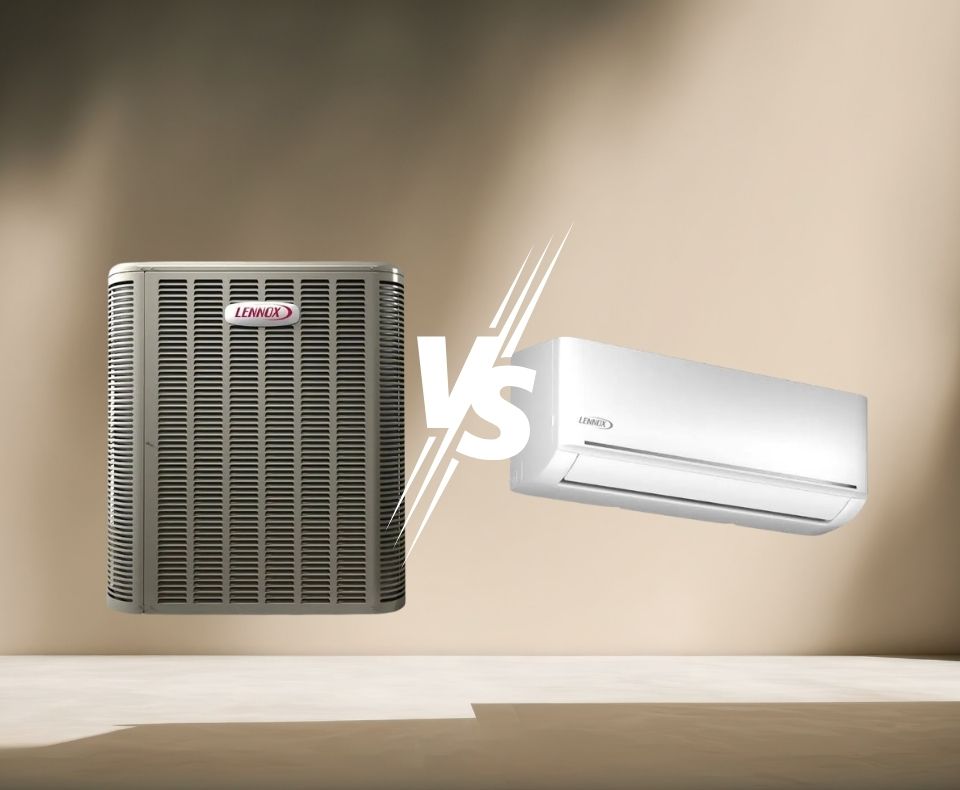
Central air conditioning and ductless systems can both cool a home effectively, but they work best in different situations. Central AC is usually better for whole-home cooling when the house already has good ductwork. Ductless systems are often better for homes without ducts, additions, garages, finished basements, sunrooms, or rooms that need independent temperature control.
The best choice depends on your home’s layout, existing ductwork, budget, energy goals, comfort problems, and installation limitations. A central AC system delivers conditioned air through ducts to the entire home. A ductless system, also called a mini-split, uses one outdoor unit connected to one or more indoor air handlers that serve specific rooms or zones.
Both systems can be efficient. Both can provide strong comfort. The wrong choice, however, can lead to uneven temperatures, higher energy bills, poor humidity control, or unnecessary installation costs.
How Central Air Conditioning Works
Central air conditioning cools the entire home through a duct system. The indoor unit contains the evaporator coil and blower, while the outdoor condenser releases heat outside. Warm indoor air is pulled through return ducts, cooled over the evaporator coil, and distributed back through supply ducts.
This system is designed for whole-home cooling. One thermostat typically controls the temperature for the entire house, although zoning can be added in some installations.
Central AC usually includes:
- Outdoor condenser unit
- Indoor evaporator coil
- Air handler or furnace blower
- Supply ducts
- Return ducts
- Thermostat
- Refrigerant lines
- Condensate drain
Central air conditioning is a practical option when ductwork already exists and is in good condition. It provides a clean indoor appearance because most components are hidden in mechanical spaces, walls, ceilings, or floors.
How Ductless Systems Work
A ductless system cools specific rooms or zones without using traditional ductwork. It includes an outdoor unit connected to indoor air handlers through refrigerant lines, electrical wiring, and condensate drains. Each indoor unit delivers conditioned air directly into the room.
Ductless systems are also called mini-splits because they are split between outdoor and indoor components. A single-zone system serves one area. A multi-zone system connects several indoor units to one outdoor unit.
Ductless systems usually include:
- Outdoor heat pump or condenser
- One or more indoor air handlers
- Refrigerant lines
- Electrical connections
- Condensate drain lines
- Remote or wall-mounted controls
Many ductless systems provide both cooling and heating, depending on the model. This makes them useful not only for summer comfort but also for supplemental or primary heating in many homes.
Main Difference Between Central AC and Ductless Systems
The main difference is air distribution. Central AC uses ductwork to cool the whole home from one central system. Ductless systems deliver air directly into individual zones without ducts.
Central AC is usually better when:
- The home already has usable ductwork
- Whole-home cooling is the goal
- A hidden indoor system is preferred
- The layout supports balanced airflow
- One consistent temperature is acceptable
Ductless systems are usually better when:
- The home has no ductwork
- Adding ducts would be expensive or invasive
- One room needs extra cooling
- Zoned comfort is important
- An addition or converted space needs conditioning
- Duct losses are a concern
Central AC treats the home as one connected air distribution system. Ductless systems treat rooms or zones individually. This difference affects comfort, installation cost, energy use, appearance, and maintenance.
Installation Requirements
Central AC installation is more practical when ducts already exist. If the home has no ductwork, installing central air can require major construction, including wall, ceiling, attic, or basement access. Duct design must be correct, or the system may struggle with airflow and efficiency.
Central AC installation may involve:
- Installing or replacing the outdoor condenser
- Installing the indoor coil
- Connecting refrigerant lines
- Connecting to existing ductwork
- Modifying ducts if needed
- Setting up condensate drainage
- Testing airflow and refrigerant charge
- Configuring the thermostat
Ductless installation is usually less invasive because it does not require full ductwork. Technicians typically mount indoor units on walls or ceilings, install the outdoor unit, and run refrigerant lines through small wall openings.
Ductless installation may involve:
- Mounting indoor air handlers
- Installing the outdoor unit
- Running refrigerant lines
- Creating wall penetrations
- Installing condensate drains
- Connecting electrical wiring
- Setting up individual controls
- Testing each zone
For homes without ducts, ductless systems usually require less construction. For homes with existing ductwork, central AC may be more straightforward.
Cooling Performance and Comfort
Central AC can provide excellent whole-home comfort when ductwork is properly designed, sealed, and balanced. It is especially effective in homes where rooms have similar cooling needs and airflow is evenly distributed.
However, central AC can struggle if the home has:
- Leaky ducts
- Poorly sized ducts
- Long duct runs
- Weak return airflow
- Multiple floors with different heat loads
- Rooms with heavy sun exposure
- Additions not included in the original duct design
Ductless systems provide targeted cooling. Each indoor unit conditions the room or zone where it is installed. This makes them useful for homes with uneven temperatures or spaces that central AC does not serve well.
Ductless systems can improve comfort in:
- Home offices
- Bedrooms
- Sunrooms
- Finished basements
- Garages
- Attic conversions
- Additions
- Guest suites
- Older homes with no ducts
The key limitation is coverage. A single ductless unit may not cool several separate rooms evenly unless doors stay open and airflow can move naturally. For whole-home ductless cooling, multiple indoor units are usually required.
Energy Efficiency
Ductless systems can be highly efficient because they avoid duct losses. In many homes, ducts lose cooled air through leaks, poor insulation, or placement in hot attics. Since ductless systems deliver air directly into the room, less energy is wasted through distribution.
Central AC can also be efficient when:
- The system is properly sized
- Ducts are sealed and insulated
- Airflow is balanced
- Coils are clean
- Refrigerant charge is correct
- The equipment has a strong SEER2 rating
Efficiency depends on more than the equipment label. A high-efficiency central AC connected to leaking ducts may perform poorly. A ductless system installed in the wrong location may also underperform.
In general:
- Central AC can be efficient for whole-home cooling with good ducts
- Ductless systems can be more efficient for zoned cooling
- Ductless avoids duct losses
- Central AC may be more cost-effective for large homes with existing ducts
- Multi-zone ductless systems can become expensive if many rooms need coverage
The most efficient option is the system that matches how the home is actually used.
Installation Cost
Central AC and ductless installation costs vary widely. The less modification a home needs, the lower the project cost usually is.
Central AC may be more cost-effective if the home already has usable ductwork. If ducts need to be installed from scratch, the cost can increase significantly.
Central AC costs may rise because of:
- New duct installation
- Duct sealing or repairs
- Electrical upgrades
- Refrigerant line replacement
- Difficult attic or crawl space access
- Zoning upgrades
- Old equipment removal
Ductless systems often have lower installation disruption but can become expensive when multiple indoor units are needed. A single-zone mini-split may be cost-effective for one room, but whole-home ductless cooling with several heads can cost more than expected.
Ductless costs may rise because of:
- Multiple indoor units
- Long refrigerant line runs
- Electrical upgrades
- Condensate pump requirements
- Complex wall or ceiling mounting
- Multi-zone outdoor equipment
- Aesthetic placement challenges
For one room or an addition, ductless is often the more practical investment. For an entire home with existing ducts, central AC may offer better value.
Appearance and Indoor Design
Central AC is less visible inside the home. Most equipment is hidden, and conditioned air comes through registers in floors, walls, or ceilings. For homeowners who prefer minimal visible equipment, central AC has an advantage.
Ductless systems require indoor air handlers. These are commonly mounted high on walls, but ceiling cassette and concealed ducted options may be available. Some homeowners do not mind the appearance, while others prefer a more hidden system.
Central AC appearance advantages:
- Minimal visible indoor equipment
- Uses standard vents and registers
- Cleaner interior look
- Works well with traditional home layouts
Ductless appearance considerations:
- Indoor units are visible
- Placement affects both comfort and design
- Wall-mounted units may not fit every room style
- Ceiling options can reduce visual impact but may cost more
Design preference matters. A ductless system may be technically efficient, but indoor unit placement should be planned carefully so it does not interfere with furniture, windows, beds, or room aesthetics.
Humidity Control
Both central AC and ductless systems can remove humidity, but performance depends on sizing, runtime, airflow, and system design.
Central AC can provide strong humidity control when properly sized. If the system is oversized, it may cool too quickly and shut off before removing enough moisture. This can leave the home feeling cool but damp.
Ductless systems often run at variable speeds, which can support longer operation and better humidity control in individual zones. However, if a ductless unit is oversized for a small room, it can also short cycle and fail to dehumidify properly.
Good humidity control requires:
- Correct system sizing
- Proper airflow
- Clean coils
- Long enough cooling cycles
- Correct refrigerant charge
- Good drainage
- Proper thermostat or control settings
In humid climates, humidity control should be part of the system selection process, not an afterthought.
Maintenance Requirements
Central AC and ductless systems both need routine maintenance. The difference is where the work happens and how many indoor components need attention.
Central AC maintenance usually includes:
- Replacing air filters
- Cleaning or inspecting coils
- Checking refrigerant charge
- Inspecting ductwork
- Clearing condensate drains
- Testing electrical components
- Checking blower operation
- Cleaning the outdoor condenser
Ductless maintenance usually includes:
- Cleaning washable filters
- Cleaning indoor air handler coils
- Checking each indoor unit
- Cleaning blower wheels
- Inspecting drain lines
- Checking refrigerant lines
- Cleaning the outdoor unit
- Testing zone controls
Ductless systems may require more frequent filter cleaning because each indoor unit has its own filters. In multi-zone systems, each indoor head must be maintained. Neglecting indoor units can lead to odors, reduced airflow, and lower efficiency.
Central AC may require less visible day-to-day attention, but ductwork, filters, coils, and drains still need regular service.
Noise Levels
Ductless systems are often very quiet indoors because each indoor unit uses a small fan and variable-speed operation. This makes them popular for bedrooms, offices, and quiet living spaces.
Central AC noise depends on equipment quality, duct design, blower speed, and register placement. A well-designed central system can be quiet, but poor ductwork can create rushing air, rattling, vibration, or noisy returns.
Noise factors include:
- Indoor blower speed
- Duct size
- Register placement
- Return air design
- Outdoor unit location
- Compressor type
- Fan motor condition
- Installation quality
If quiet operation is a priority, ductless systems often have an advantage for individual rooms. For whole-home quiet performance, central AC must be designed with proper duct sizing and airflow control.
Air Quality and Filtration
Central AC usually has a main filter installed at the return or air handler. Depending on system design, it can support higher-level filtration, whole-home air purifiers, humidifiers, dehumidifiers, and ventilation accessories.
Ductless systems have filters in each indoor unit. These filters help protect the equipment and capture larger particles, but they are usually not the same as a high-efficiency whole-home filtration system.
Central AC may be better for:
- Whole-home filtration
- Integrated indoor air quality products
- Consistent air circulation through one filtration point
- Homes with allergy or dust concerns
Ductless may be better for:
- Zoned airflow
- Rooms used independently
- Avoiding dirty ductwork
- Homes without existing ducts
- Supplemental comfort areas
If indoor air quality is a major concern, filtration strategy should be discussed during system design. The best solution may include better filters, duct sealing, humidity control, ventilation, or air purification.
Lifespan and Reliability
Both central AC and ductless systems can last many years when properly installed and maintained. Lifespan depends on equipment quality, usage, maintenance, climate, and installation conditions.
Central AC reliability depends heavily on:
- Correct refrigerant charge
- Clean coils
- Good airflow
- Duct condition
- Compressor health
- Electrical components
- Drainage
Ductless reliability depends heavily on:
- Proper installation
- Correct line set length
- Clean indoor filters
- Clean indoor coils
- Drainage design
- Outdoor unit condition
- Correct zone sizing
A poorly installed system of either type can fail early. Installation quality is often more important than brand choice alone.
Best Uses for Central Air Conditioning
Central AC is usually the better choice when the home already has good ductwork and the goal is consistent whole-home cooling. It is especially practical for larger homes where multiple rooms need cooling at the same time.
Central AC is a strong option for:
- Homes with existing ductwork
- Larger homes
- Whole-home cooling
- Homeowners who prefer hidden equipment
- Properties needing integrated filtration
- Homes with traditional HVAC layouts
- Replacing an existing central system
Central AC can be a long-term, efficient solution when ducts are sealed, airflow is balanced, and equipment is properly sized.
Best Uses for Ductless Systems
Ductless systems are usually better when ductwork is unavailable, expensive to install, or unable to serve certain rooms effectively. They are also excellent for zoned comfort.
Ductless systems are a strong option for:
- Older homes without ducts
- Home additions
- Finished basements
- Garages
- Sunrooms
- Attic conversions
- Guest rooms
- Home offices
- Rooms with persistent comfort problems
- Supplemental cooling
Ductless systems are especially useful when one area needs independent temperature control without changing the entire home’s HVAC system.
Can You Combine Central AC and Ductless?
Yes. Many homes benefit from using both systems. Central AC can handle the main living areas, while ductless units solve specific comfort problems in rooms that are hard to cool.
A combined approach may work well when:
- One room is always warmer than the rest
- An addition was built after the original HVAC system
- The upstairs level overheats
- A garage or workshop needs cooling
- A home office needs independent control
- The central system is good but not perfect
This approach can avoid replacing a central system that still works while improving comfort where it is needed most.
Which System Should You Choose?
Choose central air conditioning if your home already has reliable ductwork, you want whole-home cooling, and you prefer a system with minimal visible indoor equipment. Central AC is often the best value for larger homes with existing ducts.
Choose ductless if your home has no ducts, you need zoned comfort, or you want to cool a specific room, addition, basement, garage, or office. Ductless is often the better choice when installing ducts would be too expensive or disruptive.
The decision should be based on:
- Existing ductwork
- Home size and layout
- Number of rooms needing cooling
- Installation cost
- Energy efficiency goals
- Indoor design preferences
- Humidity control needs
- Air quality goals
- Long-term maintenance expectations
The best system is not always the most advanced one. It is the system that fits the home, solves the comfort problem, and operates efficiently over time. For homeowners comparing system options, TAMCO’s residential HVAC services can help evaluate ductwork, cooling needs, system design, and installation requirements.
Final Thoughts
Central air conditioning and ductless systems both have clear advantages. Central AC is ideal for whole-home cooling when ductwork is already in place and properly designed. Ductless systems are ideal for homes without ducts, room additions, zoned comfort, and areas that central AC does not serve well.
If you want one hidden system for the whole home, central AC may be the better choice. If you want flexible room-by-room control or need cooling without ductwork, ductless may be the smarter option. In many homes, the best solution may even be a combination of both.
The right decision should come after evaluating the home’s layout, duct condition, insulation, cooling load, comfort complaints, and budget. A properly sized and professionally installed system will always perform better than a system chosen only by price or equipment type.