18 Nov 2026

A heating replacement is not just a choice between two pieces of equipment. For New Jersey property owners, the gas furnace versus electric decision affects winter comfort, monthly operating costs, installation requirements, and how the building can adapt over time. The best answer depends on the property, the available utilities, the condition of the ductwork, and how long you expect to own or operate the space.
A qualified HVAC assessment should start with the building rather than a sales pitch. Heat loss, insulation, windows, square footage, occupancy, and existing equipment all matter. An oversized or poorly installed system can waste energy and create uneven temperatures regardless of its fuel source.
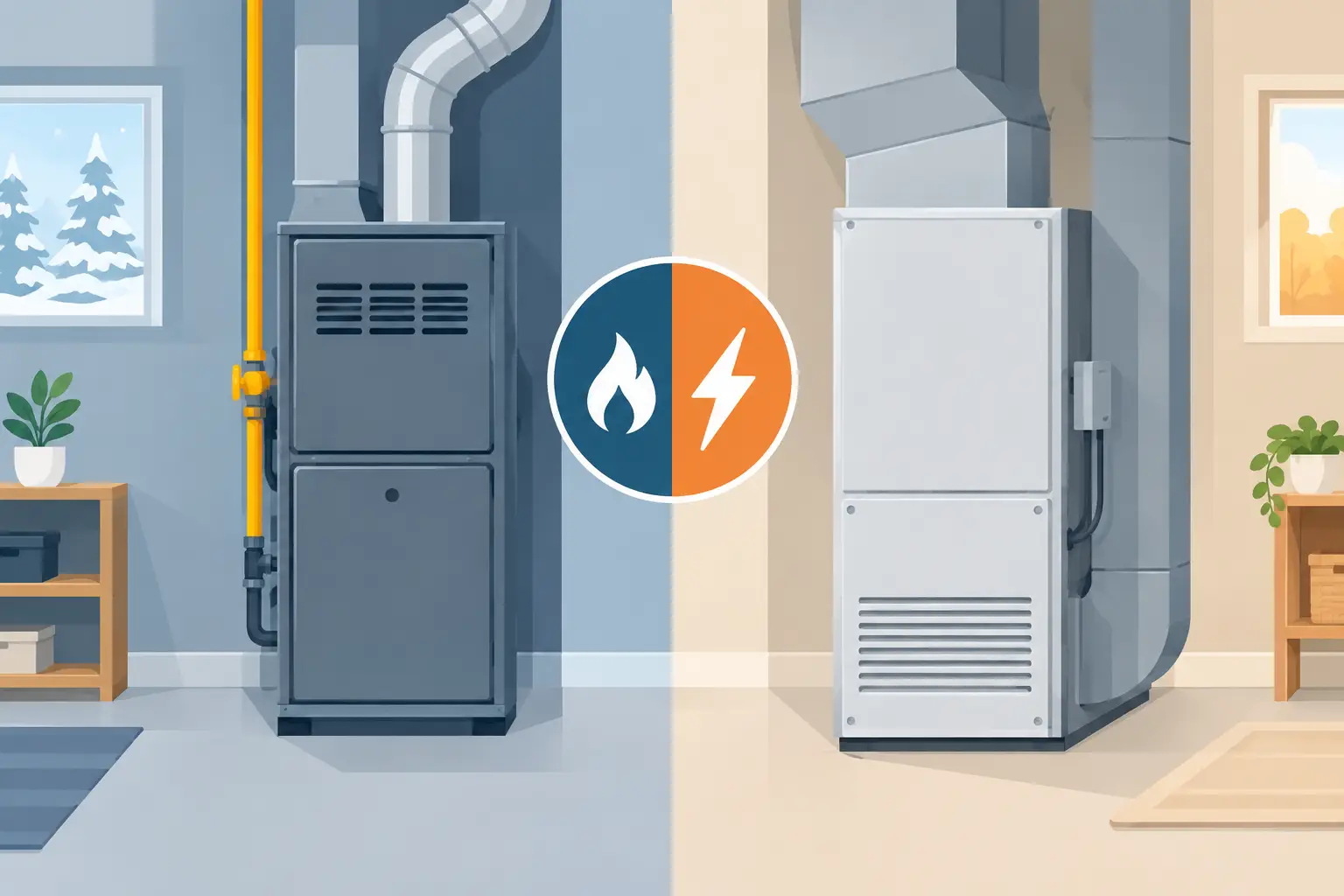
Gas Furnace Versus Electric: The Main Difference
A gas furnace burns natural gas to create heat, then uses a blower to move warm air through ductwork. Modern high-efficiency models capture much more of the heat produced than older furnaces, and they are a familiar, proven choice throughout much of New Jersey.
An electric furnace uses electric resistance heating elements. Electricity passes through the elements, which heat up and warm the air moving through the system. It also relies on a blower and ducts, so a replacement can sometimes use much of the existing distribution system.
The key difference is the cost and source of the heat. Electric resistance heat converts electricity to heat efficiently at the equipment, but electricity often costs more per unit of delivered heat than natural gas. Gas furnaces have combustion and venting requirements, but natural gas can provide economical heating where service is available.
Do not confuse an electric furnace with a heat pump. A heat pump runs on electricity but moves heat instead of creating it through resistance. It can provide heating and air conditioning in one system, and many modern cold-climate heat pumps perform well in New Jersey. For some homes, a heat pump with electric backup or a dual-fuel setup is worth comparing alongside both furnace options.
Upfront Installation Costs and Building Requirements
Electric furnaces are often simpler to install when the home already has compatible ductwork and sufficient electrical capacity. They do not need a gas line, chimney liner, combustion air provisions, or flue venting. That can make them practical in locations without natural gas service or in properties where venting a new gas appliance would be difficult.
However, simplicity does not always mean the lowest total project cost. An electric furnace may require a panel upgrade, new high-amperage circuits, or electrical work that changes the installation budget. Older homes in particular should have their electrical capacity reviewed before selecting electric resistance heat.
A gas furnace installation may involve gas piping, a properly sized vent, condensate drainage for a high-efficiency unit, and safe combustion-air planning. If a property has an existing gas furnace and properly configured infrastructure, replacement is usually more straightforward. If the property has never had gas service, bringing it in can add time, coordination, and expense.
For new construction, the decision can be planned around the full mechanical design. Builders and owners can compare utility access, duct layout, equipment location, ventilation, and future cooling needs before walls are closed. That is usually less expensive than forcing a new heating type into an older building later.
Monthly Operating Costs in New Jersey
For many New Jersey homeowners, operating cost is the deciding factor. Natural gas has often been less expensive than electricity for producing whole-home heat, which is why gas furnaces remain common. A high-efficiency gas furnace can be a cost-effective choice for a home with a gas connection and a typical winter heating load.
Still, utility rates change, and the result is never universal. Electric heating may make sense for a small addition, a lightly used space, a well-insulated home, or a property where gas installation would be unusually expensive. Solar generation can also change the equation for some owners, although winter production and household electrical demand should be considered realistically.
Ask for an estimate based on your building’s expected load, not just a comparison of equipment labels. The annual fuel utilization efficiency rating, or AFUE, tells you how efficiently a gas furnace converts fuel into usable heat. For electric resistance furnaces, the equipment itself is highly efficient at turning electricity into heat, but the price of the electricity still drives the bill.
A system that short-cycles, has leaky ducts, or is incorrectly sized can erase much of the expected savings. Sealing accessible duct leaks, improving insulation, using a programmable thermostat, and keeping filters clean often reduce heating costs no matter which system you choose.
Comfort, Reliability, and Cold-Weather Performance
Gas furnaces are known for producing hot supply air quickly. Many homeowners prefer that strong, immediate warmth during a cold New Jersey morning. They can also continue operating during a power outage if paired with appropriately designed backup power, though the blower, controls, and ignition still require electricity under normal conditions.
Electric furnaces deliver steady heat, but the air from the registers may feel less hot than air from a gas furnace. That does not automatically mean the system is underperforming. Comfort depends on proper sizing, airflow, duct design, thermostat placement, and the home’s ability to retain heat.
Both systems need regular maintenance. A gas furnace should receive annual professional service to inspect the heat exchanger, burners, venting, gas connections, ignition components, and safety controls. An electric furnace should be checked for heating-element condition, electrical connections, blower performance, and airflow issues. In either case, a neglected filter can restrict airflow, strain components, and leave rooms unevenly heated.
For commercial properties, reliability includes more than indoor temperature. Building operators should consider downtime, tenant comfort, equipment accessibility, maintenance scheduling, and the capacity of the electrical or gas infrastructure. A rooftop unit, multi-zone system, or larger engineered installation may call for a different analysis than a single-family home.
Safety and Indoor Air Considerations
Properly installed and maintained gas furnaces are designed with multiple safety controls, but combustion equipment requires professional attention. A cracked heat exchanger, blocked vent, failed ignition component, or improper venting is not a do-it-yourself repair. Every property with gas-burning appliances should have working carbon monoxide alarms in the recommended locations.
Electric furnaces do not burn fuel in the building, so they do not create combustion gases or need a flue. That is a meaningful advantage for owners who want to avoid on-site combustion. They still carry electrical and fire-safety considerations, especially if wiring, breakers, or airflow are not correctly matched to the equipment.
Neither option directly solves dry air, dust, allergens, or stale rooms. Indoor air quality improvements may require filtration, humidification, ventilation, duct cleaning when appropriate, or air sealing. Heating equipment should be part of a complete comfort plan rather than treated as an isolated purchase.
When a Gas Furnace Is Usually the Better Fit
A gas furnace is often a strong choice when the building already has natural gas service, sound ductwork, and a need for dependable whole-building heat through cold winters. It can be especially practical for larger homes and commercial spaces where electric resistance heating would create high operating costs.
It is also worth considering when you want to retain a conventional central AC system. In many homes, the furnace blower and ductwork support both winter heating and summer cooling, making the system familiar to service and straightforward to operate.
When Electric Heat May Be the Better Choice
Electric heat can be a sensible option for homes without gas service, additions, smaller buildings, or projects where installing gas piping and venting is not practical. It may also fit owners who prioritize eliminating combustion equipment from the property.
Before choosing it for a whole home, confirm the electrical panel capacity and compare projected heating bills. If the goal is electric heating with lower energy use, ask whether a cold-climate heat pump or dual-fuel design would provide a better long-term balance than an electric furnace alone.
Make the Choice With a Site-Specific Estimate
The right heating system is the one that matches the building, budget, utility availability, and comfort expectations. A reliable contractor should inspect the existing equipment, verify the heating load, review ductwork or electrical capacity, and clearly explain the installation scope before recommending a replacement.
For homeowners, property managers, and builders across New Jersey, Tamco Air can help evaluate the practical details behind the decision and provide a clear estimate. A short on-site assessment now can prevent years of high energy bills, uneven heating, or avoidable repair calls later.