17 Oct 2026

A thermostat can read 72 degrees while one bedroom feels stuffy, the upstairs stays hot, and the basement is chilly. Older home ductwork problems are often behind these frustrating comfort gaps. The heating or cooling equipment may still run, but damaged, undersized, or poorly insulated ducts can prevent conditioned air from reaching the rooms that need it.
In many older New Jersey homes, ductwork has been altered over decades of additions, finished basements, attic renovations, and equipment replacements. Because most ducts are hidden behind walls, above ceilings, or in crawl spaces, problems can build quietly until utility bills rise or the system can no longer keep up.
Why Older Home Ductwork Develops Problems
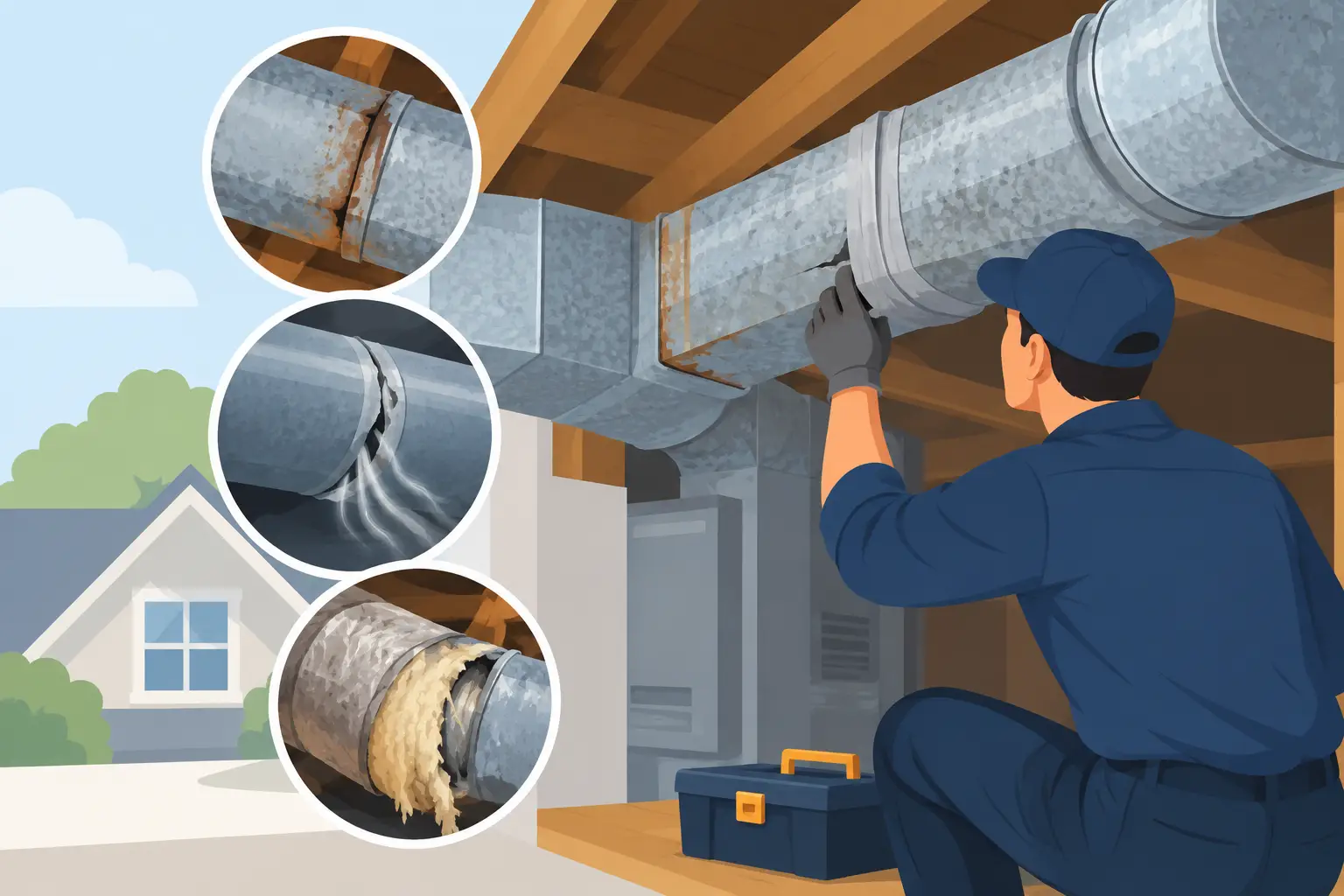
Duct systems do not last forever, especially when they are exposed to attic heat, basement dampness, crawl space moisture, or years of vibration from an HVAC blower. Metal ducts can separate at joints. Older flexible duct can sag, tear, or become crushed behind stored items. Duct insulation can deteriorate, leaving conditioned air exposed to extreme temperatures before it reaches a living space.
Age is only one part of the picture. Many homes were built with heating systems that were later adapted for central air conditioning. In those cases, the original duct layout may not have been designed for the airflow an air conditioner requires. A room addition, converted garage, or finished attic can make the imbalance worse if the existing system was never redesigned to serve the new space.
Older systems may also use materials and sealing methods that do not perform like modern ductwork. Cloth-backed duct tape dries out and fails. Screws, old mastic, and connections can loosen over time. In some very old installations, suspected asbestos-containing materials require careful professional evaluation before any work begins.
Signs of Older Home Ductwork Problems
A duct issue does not always create an obvious noise or visible tear. More often, it appears as a pattern of comfort, efficiency, and air quality concerns throughout the property.
Some Rooms Never Reach the Set Temperature
If your system runs for long cycles but certain rooms remain too warm in summer or too cold in winter, airflow may be restricted or escaping before it reaches those rooms. Closed dampers, disconnected runs, crushed flexible ducts, and undersized branch ducts can all create this problem. Before assuming the equipment needs replacement, the duct system should be inspected as part of the diagnosis.
Energy Bills Rise Without a Clear Reason
Leaky ducts force the furnace or air conditioner to work harder. In an attic or crawl space, lost conditioned air is especially costly because the system is paying to heat or cool an unoccupied area. Return duct leaks can be just as troublesome, pulling hot, humid, dusty, or musty air into the system.
Higher bills can also come from aging HVAC equipment, poor insulation, or thermostat settings, so ductwork is not automatically the cause. Still, when high utility costs occur alongside uneven temperatures, a duct evaluation is a practical next step.
Airflow at Vents Feels Weak or Inconsistent
A vent that barely moves air may be connected to a duct run with a major leak, blockage, sharp bend, or sag. Weak airflow can also result from a dirty filter, blower issue, or closed damper. A qualified technician can separate a simple maintenance issue from a larger distribution problem instead of guessing based on one symptom.
Dust, Odors, or Humidity Keep Returning
Excessive dust around supply vents, persistent basement odors, or humid rooms can point to return-air leaks or unsealed duct connections. Leaky returns may draw particles and odors from unfinished spaces into the air stream. Duct cleaning may help in specific situations, but it will not fix air leaks, water intrusion, or a duct design problem. The source needs to be addressed first.
What a Professional Ductwork Inspection Should Include
A useful duct inspection is more than a quick look at the vents. The technician should assess the condition and size of accessible supply and return ducts, inspect joints and insulation, look for disconnected or damaged sections, and check whether major rooms are receiving appropriate airflow.
The HVAC equipment also needs to be part of the conversation. An oversized system can cycle too quickly, while an undersized system may run constantly. Either condition can be mistaken for a duct issue. Static pressure testing, airflow measurements, and a review of the home’s layout help identify whether the problem is leakage, poor design, equipment performance, or several issues working together.
For property managers and owners of small commercial spaces, the same principle applies. Complaints from tenants in one office suite or apartment stack may be related to dampers, duct leakage, zoning, or a system that has changed over time without a full airflow review.
When Duct Sealing Is Enough
Duct sealing can be a cost-effective repair when the main duct trunks are in good condition and the issue is limited to accessible gaps, loose connections, or failing seams. Proper sealing uses approved mastic or HVAC-rated materials, not ordinary household tape. Reinsulating ducts in an unconditioned attic or crawl space may also improve comfort and reduce energy loss.
Repair is often the right choice when the duct layout is generally sound, the system has adequate airflow capacity, and only a few sections need attention. It can be particularly effective after a renovation where a connection was disturbed or where a new supply run needs to be balanced with the existing system.
However, sealing cannot correct every issue. If flexible ducts are badly crushed, internally deteriorated, contaminated by moisture, or too small for the required airflow, replacement may be the more dependable option.
When Duct Replacement or Redesign Makes Sense
Full or partial duct replacement is worth considering when repairs would only extend the life of a poorly designed system. Common examples include ducts that are severely rusted, inaccessible runs that leak inside walls, undersized return ducts, or a layout that cannot properly serve an added second floor or finished basement.
A redesign can also make sense during furnace or air conditioner replacement. Installing high-efficiency equipment on an inadequate duct system may limit the comfort and efficiency you expect from the new unit. In some homes, adding returns, resizing key trunk lines, separating zones, or using a ductless mini-split for a difficult addition is more practical than opening large sections of finished walls.
The best option depends on the home’s construction, budget, equipment condition, and the location of the problem. A targeted repair may be enough for one damaged branch line. A home with widespread comfort issues may benefit more from a broader airflow plan.
Protecting Ductwork After Repairs
Once ductwork has been repaired or upgraded, routine HVAC maintenance helps protect that investment. Replace filters on schedule, keep supply and return vents clear of furniture, and avoid closing too many vents in an attempt to force air into another room. That practice can raise system pressure and create new airflow problems.
Pay attention to changes after major home projects. New insulation, a remodeled basement, replacement windows, or a room addition can change how air moves through the house. Addressing airflow concerns early is usually easier than waiting until the HVAC system is under constant strain.
Tamco Air can inspect older duct systems, identify the source of uneven comfort, and recommend repairs or replacement based on what the property actually needs. If one room is consistently uncomfortable or your system seems to run harder every season, a professional evaluation can turn a hidden duct issue into a clear, workable plan.
Comfort should not depend on which room you are standing in. A careful ductwork assessment gives you a practical starting point for improving airflow, controlling energy costs, and getting more reliable performance from the heating and cooling system you already own.