19 Oct 2026

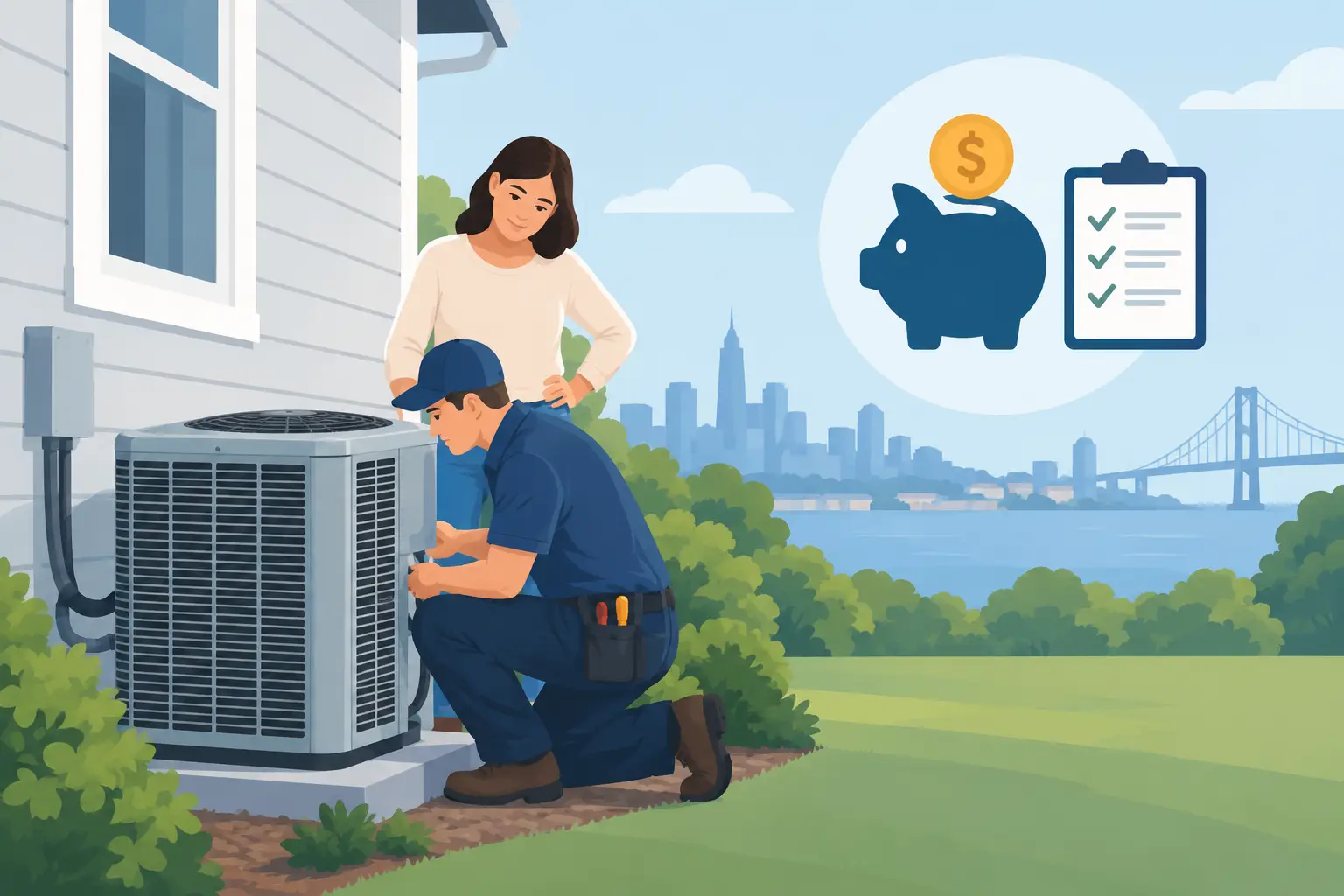
A new HVAC system is one of the larger investments in a home or commercial property, but it should not feel like a mystery. HVAC installation costs depend on far more than the unit sitting outside. System size, ductwork, efficiency level, electrical upgrades, building layout, and installation complexity all affect the final price.
For New Jersey homeowners, property managers, and builders, the right question is not simply, “What does a new HVAC system cost?” It is, “What system will keep this property comfortable, operate efficiently, and fit the building without creating expensive problems later?” A clear on-site estimate should answer that question before work begins.
Typical HVAC Installation Costs in New Jersey
Most residential HVAC replacements fall within a broad range because no two properties are exactly alike. A straightforward replacement of a central air conditioner or furnace that uses existing, properly sized connections will generally cost less than a full system installation requiring new ductwork, electrical work, or changes to the equipment location.
As a general planning range, homeowners may see the following project costs:
- Central air conditioning replacement often runs from about $5,000 to $12,000 or more.
- A furnace replacement may range from roughly $4,500 to $10,000, depending on fuel type, efficiency, venting, and capacity.
- A complete heating and cooling system replacement commonly lands between $9,000 and $20,000 or more.
- Ductless mini-split systems can range from about $4,000 for a simple single-zone setup to $18,000 or more for multi-zone whole-home comfort.
- New construction, major renovations, and commercial projects are custom-priced because design, duct layout, controls, zoning, and equipment access can change the scope significantly.
These are planning figures, not a substitute for an inspection. A lower number may be appropriate for a simple installation, while an older home, a large property, or a system with airflow issues may require additional work that should be identified upfront.
What Drives HVAC Installation Costs?
Equipment type and capacity
The equipment itself is a major part of the budget. A basic single-stage air conditioner costs less than a variable-speed system with advanced humidity control. Similarly, a high-efficiency gas furnace or heat pump may have a higher upfront price than standard equipment, but it can reduce energy use over time.
Capacity matters just as much. HVAC equipment is measured in tons for cooling and BTUs for heating. Bigger is not automatically better. An oversized air conditioner can cycle on and off too quickly, leaving rooms humid and wasting energy. An undersized unit may run constantly and still struggle during extreme weather. Proper sizing requires a load calculation that considers square footage, insulation, windows, ceiling height, sun exposure, occupancy, and more.
Ductwork and airflow corrections
A new furnace or air conditioner cannot perform as intended if the duct system is leaking, undersized, poorly routed, or unbalanced. Some replacement projects only need minor transitions to connect new equipment. Others require duct modifications, new returns, sealing, insulation, or a complete redesign.
Ductwork is often the difference between a quick equipment swap and a full comfort project. It can add to the initial investment, but correcting airflow problems may eliminate hot bedrooms, cold offices, noisy vents, and uneven temperatures that a new unit alone would not fix.
Efficiency ratings and long-term operating costs
Higher efficiency equipment generally costs more at installation. For air conditioners, the Seasonal Energy Efficiency Ratio 2, or SEER2, helps indicate cooling efficiency. Furnaces use Annual Fuel Utilization Efficiency, or AFUE. Heat pumps have both heating and cooling efficiency ratings.
The best option depends on how long you expect to own the property, local utility costs, available rebates, and how the building is used. A family in a long-term home may value lower monthly operating costs and better humidity control. A property manager replacing equipment in multiple units may prioritize dependable equipment, standardization, and serviceability. Paying for the highest rating is not always the best financial choice, but selecting the cheapest system can cost more in energy use and repairs over its life.
Installation conditions and access
Where the equipment is located affects labor and materials. An attic air handler, rooftop unit, tight crawl space, finished basement, or older mechanical room may require more time and specialized planning than equipment installed in an open utility area.
Other possible cost factors include crane access for rooftop commercial units, condensate drainage improvements, refrigerant line replacement, gas piping, flue venting, pad installation, thermostat upgrades, and removal of old equipment. In New Jersey, permit requirements and local code compliance also need to be included in a professional proposal.
Why the Lowest Quote Can Be Expensive
Two estimates can list similar-looking equipment yet represent very different installations. One may include proper sizing, permits, code-required safety upgrades, new thermostats, startup testing, and warranty registration. Another may leave essential work out of the price or assume the existing system is acceptable without inspecting it closely.
Before comparing proposals, confirm what each quote includes. Ask whether the contractor evaluated the ductwork, calculated the required capacity, will pull permits when needed, and will explain warranty coverage. For commercial work, ask how the installation schedule will protect tenants, employees, inventory, and daily operations.
A detailed estimate is not about making a project look more complicated. It is about preventing surprise charges and ensuring the installed system can deliver the comfort and reliability you are paying for.
Replacement vs. Repair: When Installation Makes Sense
Repair is often the right call when the equipment is relatively new and the issue is isolated. A failed capacitor, contactor, sensor, or small electrical component does not automatically justify replacing an entire system.
Installation becomes more practical when equipment is near the end of its expected service life, repair costs are growing, parts are difficult to obtain, or the system uses outdated refrigerant. Frequent breakdowns, uneven temperatures, rising utility bills, and excessive noise are also signs that the current setup deserves a closer look.
For many property owners, the decision comes down to timing and risk. Replacing a failing system on your schedule provides more choices than waiting for a no-heat call in January or an air conditioning failure during a summer heat wave. It also allows time to compare efficiency options and plan improvements such as zoning, indoor air quality equipment, or smart thermostat controls.
How to Budget for a New HVAC System
Start with the comfort problem you want to solve, not just the brand name of the equipment. If one side of the house is always warmer, if tenants complain about inconsistent temperatures, or if certain rooms have weak airflow, mention that during the estimate. Those details can point to duct, zoning, or sizing issues that should be addressed with the installation.
It is also wise to ask about financing options, manufacturer promotions, utility incentives, and applicable tax credits. Availability and eligibility change, so these savings should be verified for the specific equipment and installation date. They can help offset the cost of qualifying high-efficiency systems, but they should not be the only reason to choose a particular model.
For commercial owners and managers, budget planning should include more than equipment price. Consider installation timing, rooftop access, tenant coordination, controls integration, and the cost of downtime. A well-planned replacement can reduce disruption while improving energy performance across the property.
Get an Estimate Built Around Your Property
The most useful HVAC estimate is based on a real inspection, clear scope of work, and a discussion of your goals. It should distinguish between required repairs, worthwhile upgrades, and optional features so you can make a confident decision.
Tamco Air provides free estimates for homeowners and commercial property owners across New Jersey, with experienced technicians who can assess replacement, new construction, ductless, and complex multi-zone needs. The right system should feel like a planned improvement, not a costly surprise – and a careful evaluation is where that confidence starts.