


 25 Aug 2025

Preparing your HVAC system for winter protects your home or business from surprise breakdowns, high utility bills, and unsafe operation. The essentials are simple: check safety controls, restore clean airflow, verify combustion and venting, tune thermostats for winter schedules, and address small issues before they become cold-weather emergencies. This guide walks you through what to do yourself, what to expect from a professional tune-up, and how to decide if an upgrade before the first deep freeze will pay off.
If you need help at any point, explore tailored support for homeowners via Residential HVAC services or plan seasonal readiness for buildings with Commercial HVAC services.
The One-Hour Pre-Winter Audit: What to Check First
Start with a quick audit that confirms safety, efficiency, and comfort before temperatures drop.
-
Replace or wash return filters; confirm the correct size, orientation, and MERV rating.
-
Test the thermostat in HEAT mode; confirm the system starts, blows warm air, and shuts off as set.
-
Listen for unusual sounds from the blower or outdoor unit; persistent hums, grinding, or rattles merit fan motor services.
-
Inspect supply and return grilles; vacuum dust and clear obstructions (curtains, furniture).
-
Check carbon monoxide detectors and replace batteries.
-
Confirm outdoor equipment clearance (heat pumps need 18–24 inches around coil faces).
-
Look for water around indoor equipment; clear condensate drains and traps.
-
Note any rooms that lag behind others; you may need balancing or duct sealing.
“Catching airflow restrictions and control issues now is cheaper than an emergency call during the first cold snap.” — Senior service manager
Safety First: Heat Exchangers, CO Protection, and Electrical Checks
Safety checks protect people and equipment before runtimes spike.
-
Heat exchanger integrity: Any cracks or corrosion risk CO intrusion. A pro inspection during a furnace tune-up is essential; book professional furnace repair & installation if defects are found.
-
Combustion air: Mechanical rooms need adequate make-up air; tight homes may require dedicated combustion air pathways or sealed combustion appliances.
-
Electrical: Loose lugs, scorched wires, and weak capacitors are common winter failure points.
-
CO detectors: Install on each level and outside sleeping areas; test monthly and replace per manufacturer schedule.

Filters and Airflow: The Cheapest Performance Upgrade
Clean filters and low static pressure ensure warm air reaches every room efficiently.
-
Choose MERV 8–13 media compatible with your blower; too-restrictive filters can starve airflow.
-
Replace on a 30–90 day cadence in winter, faster with pets or renovations.
-
For multi-head mini-splits, wash cassette screens monthly and inspect coils seasonally.
-
If you hear whistling returns or feel weak supply air, ask for a static pressure test during your tune-up through Residential HVAC services or Commercial HVAC services.
“Most ‘no heat’ calls start as airflow problems—dirty filters, closed returns, or undersized duct runs.” — Commissioning specialist
Ductwork: Sealing, Insulation, and Balancing for Even Heat
Your furnace or heat pump can’t overcome leaky or undersized ducts.
-
Seal with mastic or UL-listed tape at joints, boots, and plenums; prioritize attics, crawlspaces, and basements.
-
Insulate ducts outside the thermal envelope to R-6 to R-8.
-
Balance supply and returns: fully open registers to start; adjust only after verifying static pressure.
-
Add or enlarge returns in large rooms to prevent pressure imbalances and door whistling.
Thermostats and Controls: Smarter Setbacks for Winter
Winter comfort and savings start at the thermostat.
-
Program weekday/weekend schedules with gentle setbacks (2–4°F) to avoid long recovery times.
-
Enable adaptive recovery or “smart response” so heat starts early before wake-up.
-
Position thermostats away from drafts and sun; add remote sensors for problem rooms.
-
For multi-zone buildings, coordinate schedules and lockouts with Commercial HVAC services.
Combustion and Venting: Draft, Condensate, and Flue Health
Combustion appliances must vent safely and drain properly.
-
Verify inducer motor starts, pressure switch proves draft, and flames are steady and blue.
-
Inspect PVC flue terminations for icing, leaves, or nests; maintain clearances.
-
For condensing furnaces, clean traps and confirm condensate lines slope and are heat-taped where exposed.
-
If your furnace fails flame sensing, clean the rod or schedule professional furnace service.
Humidity and IAQ: Comfortable Air Isn’t Just Warm
Dry winter air triggers static, sore throats, and wood shrinkage; the fix is controlled humidity and clean air.
-
Maintain indoor 30–45% RH; use whole-home humidifiers sized to duct airflow and envelope leakage.
-
Keep evaporator and secondary heat-exchange coils clean—book coil cleaning for peak performance.
-
Integrate ERV/HRV ventilation to dilute pollutants without big heat penalties, especially in tight homes.
-
Upgrade to MERV 11–13 where static allows; add media cabinets for easy changes.
“Winter comfort is 50% temperature and 50% moisture. Target steady RH in the 30s and your home will feel warmer at the same setpoint.” — Building performance consultant
Heat Pump Owners: Cold-Weather Readiness
Heat pumps thrive in winter with proper setup and defrost management.
-
Clear snow/ice from the outdoor coil; never cover a running heat pump.
-
Confirm defrost cycles operate and that auxiliary heat stages are configured.
-
Check outdoor unit feet and pad are level to prevent vibration and liquid line strain.
-
If the outdoor fan chatters or stalls, schedule fan motor services.
Gas Furnace Owners: Burners, Sensors, and Draft
Furnaces need clean flame paths and reliable safeties.
-
Clean burners, inspect crossover ports, and verify manifold pressure per spec.
-
Clean or replace flame sensor; slight oxidation can cause nuisance lockouts.
-
Inspect the inducer assembly and gasket for leaks; listen for bearing noise.
-
Businesses with multiple furnaces should align service windows via commercial furnace services.
Outdoor Equipment: Clearances and Coil Care
Even in winter, outdoor units matter.
-
Air-source heat pumps: Keep 18–24 inches of clearance around coil faces; raise units above typical snow depth.
-
Straight-cool condensers (paired with furnaces): Power off and clean debris; do not wrap tightly—use manufacturer-approved covers that allow ventilation if recommended.
-
Ensure downspouts don’t pour onto equipment; ice can bend fan blades.
Insulation and Envelope: The Load You Don’t See
Reducing the building’s heat loss shrinks runtime and blunts cold-snap spikes.
-
Add attic insulation where cost-effective; seal top-plate gaps and can lights first.
-
Weatherstrip exterior doors and attic hatches; close fireplace dampers when unused.
-
Use insulating film or cellular shades on drafty windows; address big infiltration paths near rim joists.
What a Professional Winter Tune-Up Should Include
A thorough tune-up pays for itself in avoided repairs and lower bills.
-
Safety: heat exchanger inspection, gas leak and CO checks, ignition system test.
-
Electrical: measure start/run amps, capacitor μF values, tighten lugs.
-
Airflow: static pressure test, blower wheel inspection/cleaning, filter evaluation.
-
Combustion: set gas pressure, verify flue draft, analyze CO/CO₂ and excess air.
-
Controls: test thermostat, staging, lockouts, and heat pump defrost logic.
-
Documentation: readings before/after, recommendations, and parts forecast.
Schedule via Residential or coordinate a multi-unit plan with Commercial.
“Ask your technician for numbers—static, temperature rise, and combustion readings. If they measure it, they can manage it.” — Lead technician
When to Upgrade Before Winter
Upgrading early can prevent mid-season failures and secure rebates.
-
Frequent lockouts, cracked exchangers, or obsolete parts signal replacement.
-
High utility bills with long runtimes may justify a variable-speed furnace or cold-climate heat pump.
-
Duct bottlenecks or noisy returns often pair well with a blower upgrade.
-
Compare options and timelines through new HVAC installation and professional furnace repair & installation.

Commercial Winterization: RTUs, Economizers, and Uptime
Commercial systems need planned maintenance windows and documented commissioning.
-
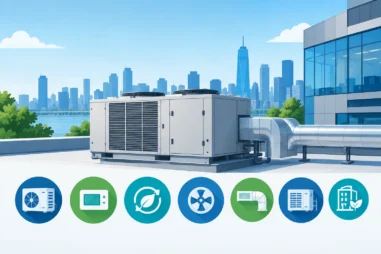
Inspect rooftop units (RTUs) for hail damage, bent fins, and gasket integrity; verify curb insulation.
-
Test freeze-stats on coils, drain pan heat, and heat strips for heat pumps.
-
Confirm economizer dampers close tightly in freezing weather; recalibrate mixed-air sensors.
-
Coordinate filter and belt changes, bearing lubrication, and vibration checks; align spares inventory.
-
For storefronts, kitchens, and offices, align scope with commercial AC systems, commercial fan motor services, and commercial furnace services.
Troubleshooting Early-Season Issues
Fixing the first symptoms prevents bigger failures later.
-
No heat: Check breaker, furnace switch, filter, and thermostat mode; look for error codes on control boards.
-
Short cycling: Replace filters; verify pressure switch tubing isn’t cracked; examine flame sensor.
-
Cold spots: Open returns, confirm dampers aren’t shut, and consider adding a return; seal duct leaks.
-
Burning smell on first run is often dust on heat exchangers; it should clear in minutes with windows cracked. Persistent odors need inspection.
-
Outdoor unit frosts: Heat pumps should defrost automatically; heavy icing suggests a sensor, control, or airflow issue—call for service.
The Homeowner’s 30–90 Minute Winter Prep Routine
This routine maximizes results between professional visits.
-
Replace the main filter and clean return grilles.
-
Test HEAT mode, verify temperature rise at a main supply, and listen for odd noises.
-
Vacuum around the furnace or air handler; keep combustibles away.
-
Verify humidifier operation and water supply; set RH target to 35–40%.
-
Clear outdoor unit vegetation and snow risks; confirm unit is level.
-
Walk the home: open all supplies/returns, note any problem rooms, and add door sweeps where needed.
-
Test CO detectors and thermostat batteries; label filter sizes and change dates.
Parts and Spares to Have on Hand
A small kit prevents weekend outages.
-
One spare filter (or a box, labeled by size and MERV)
-
Thermostat batteries and a basic multimeter
-
Condensate tablets and a small wet/dry vacuum for drain clearing
-
A flashlight, fin comb, and soft brush for light coil dust
-
Contact info for your trusted provider and model/serial photos
FAQs
How often should I service my system in winter?
Plan a full heating tune-up once a year and a cooling tune-up in spring. Filter checks every 30–60 days keep airflow optimal.
Is a smart thermostat worth it?
Yes, if used correctly. Features like adaptive recovery, geofencing, and sensor-based averaging improve comfort and reduce runtime.
Should I close vents in unused rooms?
Generally no. Closing too many registers raises static pressure, causing noise and reduced efficiency. Use mild setbacks and, if needed, zoning.
What humidity level is best in winter?
Aim for 30–45% RH. Too low feels harsh and increases static; too high risks condensation on windows and inside walls.
Do I need to cover my outdoor unit?
Cover straight-cool condensers only with manufacturer-approved breathable covers; never cover a running heat pump.
Ready for a Warmer, Safer Winter?
A measured tune-up now beats a mid-January emergency. If you’re a homeowner, schedule a visit through Residential HVAC services, including coil cleaning and fan motor services as needed. Managing a property or office? Coordinate a winterization plan across units with Commercial HVAC services, then align scopes for commercial furnace services and commercial fan motor services. Need a long-term fix instead of another repair? Compare options with new HVAC installation and professional furnace repair & installation.
Let’s get your system winter-ready today—warm, quiet, and efficient. ✅