


 04 Aug 2026
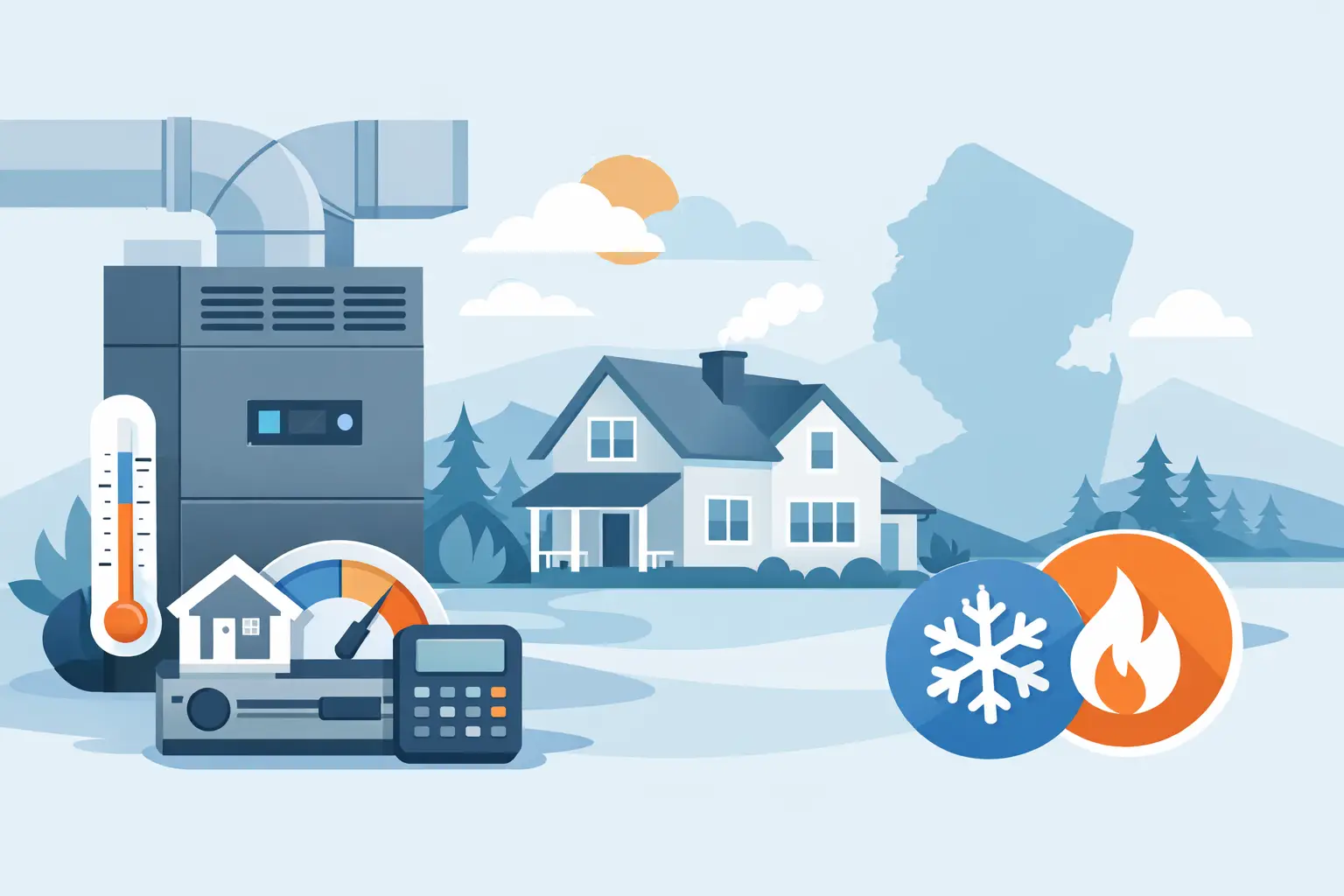
A furnace that is too small can leave bedrooms chilly when a New Jersey cold snap arrives. A furnace that is too large can create a different problem: short heating cycles, uneven temperatures, more wear on components, and higher operating costs. The right size is not a guess based on your neighbor’s house or the capacity of the system being replaced. Knowing how to size home furnace equipment starts with understanding your home’s actual heat loss.
Furnace Size Is Measured in BTUs
Furnace capacity is measured in BTUs, or British Thermal Units. In simple terms, a BTU measures how much heat a furnace can produce in an hour. A furnace may be rated at 60,000, 80,000, 100,000, or more BTUs per hour.
That rating is not always the amount of heat that reaches your home. Furnace efficiency matters as well. An 80,000-BTU furnace with a 95% AFUE rating delivers roughly 76,000 BTUs of usable heat. AFUE means Annual Fuel Utilization Efficiency, and it indicates how much fuel is converted into heat rather than lost through exhaust.
This is why comparing furnace sizes without comparing efficiency ratings can lead to the wrong choice. A high-efficiency furnace may provide the required output at a lower input rating than an older, less efficient unit.
How to Size Home Furnace Capacity Correctly
The reliable method is a professional heat-load calculation, commonly called a Manual J calculation. It measures how quickly your house loses heat under local winter design conditions, then identifies the heating capacity needed to maintain the indoor temperature you want.
A proper calculation considers much more than square footage. It accounts for your home’s layout, insulation levels, windows, air leakage, ceiling height, and the climate where you live. It also looks at whether rooms sit over an unheated garage, whether the basement is conditioned, and how much sun the home receives.
For New Jersey homes, this detail matters. A compact, well-insulated home in Middlesex County may need substantially less heating capacity than an older home of the same size with original windows, limited attic insulation, and drafty exterior doors. Two houses with the same square footage can have very different furnace needs.
The Factors That Change Furnace Sizing
Square footage is a starting point, not the answer. A technician must also assess the parts of the home that allow heat to escape. These include exterior walls, attic space, windows, doors, floors over unconditioned areas, and gaps around penetrations for plumbing, wiring, or recessed lights.
Ceiling height changes the calculation too. A 2,000-square-foot ranch with standard eight-foot ceilings has less air volume to heat than a 2,000-square-foot home with cathedral ceilings and an open two-story foyer. Finished basements, additions, sunrooms, and bonus rooms can also change the load significantly.
Ductwork deserves attention. Leaky, undersized, poorly insulated, or poorly designed ducts can limit the heat delivered to certain rooms. Installing a correctly sized furnace on inadequate ductwork will not solve comfort problems. In some homes, duct repairs, balancing, zoning, or a ductless solution may be part of the best long-term answer.
Why the Square-Footage Rule Can Mislead You
You may see general estimates suggesting a certain number of BTUs per square foot. Those estimates can be useful for a rough budget conversation, but they are not accurate enough to select a furnace.
For example, a common rule of thumb might put a 2,000-square-foot home in a broad range of 60,000 to 100,000 BTUs. That is a large range, and choosing from it without testing the home’s heat loss is risky. The lower end may be right for a newer, tightly built house. The upper end may be necessary for an older, less insulated property. Or the actual answer may fall somewhere in between.
Using the old furnace as the only guide is equally risky. Many older furnaces were oversized from the start, especially when fuel was less expensive and efficiency standards were lower. A replacement system should be selected for the home as it performs now, including any insulation, window, air-sealing, or renovation improvements made since the prior installation.
What Happens When a Furnace Is Oversized
Homeowners often assume bigger means safer. With heating equipment, bigger can create comfort and efficiency issues.
An oversized furnace heats the thermostat area quickly and shuts off before it has time to distribute warmth evenly throughout the home. This frequent start-stop pattern is called short cycling. Rooms farther from the thermostat may stay cool, while the main living area feels too warm. The repeated cycling can also add wear to ignition components, motors, and other parts.
Oversizing can be especially noticeable with a single-stage furnace, which runs at full output whenever it starts. Two-stage and modulating furnaces can reduce some of the impact because they adjust output more gradually, but they still need to be matched to the home’s calculated load.
What Happens When a Furnace Is Undersized
A furnace that is too small may run for long periods during the coldest weather and still struggle to reach the thermostat setting. Some homeowners notice this first in rooms over garages, upper floors, or additions with more exposed walls and windows.
Long run times are not automatically a problem. On the coldest days of the year, a properly sized high-efficiency furnace may run for extended periods to maintain a steady temperature. The concern is when it cannot keep up with normal design winter conditions or leaves consistent cold spots throughout the home.
Before assuming the furnace is undersized, have the system inspected. Restricted airflow, dirty filters, duct leakage, thermostat issues, inadequate insulation, and poor air sealing can all make a correctly sized unit seem inadequate.
Choose Features After Capacity Is Confirmed
Once the load calculation identifies the right heating capacity, you can compare furnace features that affect comfort, fuel use, and budget.
A single-stage furnace is often a practical option for homes with straightforward heating needs. It operates at one output level. A two-stage furnace can run at a lower setting for much of the season, then use high fire when outdoor temperatures drop. This generally supports quieter, more even heating.
A modulating furnace makes smaller output adjustments and can hold a more consistent indoor temperature when paired with compatible controls and properly designed ductwork. It may be a worthwhile investment for homeowners focused on premium comfort and efficiency, though the best choice depends on the house, existing system, and installation budget.
Variable-speed blower motors are another feature worth discussing. They can improve airflow control, reduce noise, and support more consistent temperatures. They may also help with filtration and circulation when the system is set up correctly.
Plan for the Whole Heating System
Furnace replacement is a good time to look beyond the cabinet in the basement, attic, or utility room. The installation should include confirmation of gas piping, venting, combustion air, condensate drainage for high-efficiency equipment, electrical connections, thermostat compatibility, and duct capacity.
If your home has persistent temperature differences, ask about airflow testing and duct balancing. If one area of the home has different occupancy or heating needs, such as a finished attic, home office, or in-law suite, a zoning system or ductless mini-split may offer better control than simply installing a larger furnace.
For a new construction project or major renovation, heating load calculations should happen before equipment and ducts are selected. This gives the HVAC design a chance to support the floor plan rather than forcing a one-size-fits-all system into the home after construction is complete.
Questions to Ask Before Approving a Furnace Estimate
A dependable estimate should explain more than the furnace model and price. Ask whether a Manual J load calculation was completed, what output capacity is being recommended, and how the furnace efficiency changes its delivered heat. You should also ask whether the existing ducts can handle the required airflow and whether any repairs or modifications are recommended.
Confirm what is included in installation, permits, startup testing, warranty coverage, and removal of the old equipment. A lower initial quote can become more expensive if it excludes necessary venting, electrical work, duct improvements, or code-required upgrades.
Tamco Air evaluates the full system so homeowners can make a confident replacement decision based on comfort, efficiency, and the conditions inside their own home.
A properly sized furnace should not announce itself with constant cycling, hot-and-cold rooms, or a thermostat that never seems satisfied. It should provide steady heat when winter is at its worst, while giving your home the efficiency and dependable performance it needs for years ahead.